
Table of Contents
Table of Contents
TL;DR: Web Search APIs vs AI Search comes down to one question. Do you need raw links, or answers ready for an LLM? Web Search APIs return URLs and snippets. AI web search returns extracted, ranked context built for agents and RAG.
Most teams pick a search provider on price per call. That is the wrong filter. Web Search APIs vs AI Search hinges on what happens after the API responds, since a cheap API forcing you to build crawling and extraction often costs more than one handing you finished context.
Three products sit under one label. A Web Search API gives raw retrieval and control. AI native search gives semantic retrieval plus extraction built for LLM use. A SERP API gives real rankings for SEO work. This guide compares relevance, freshness, cost, and control across all three.
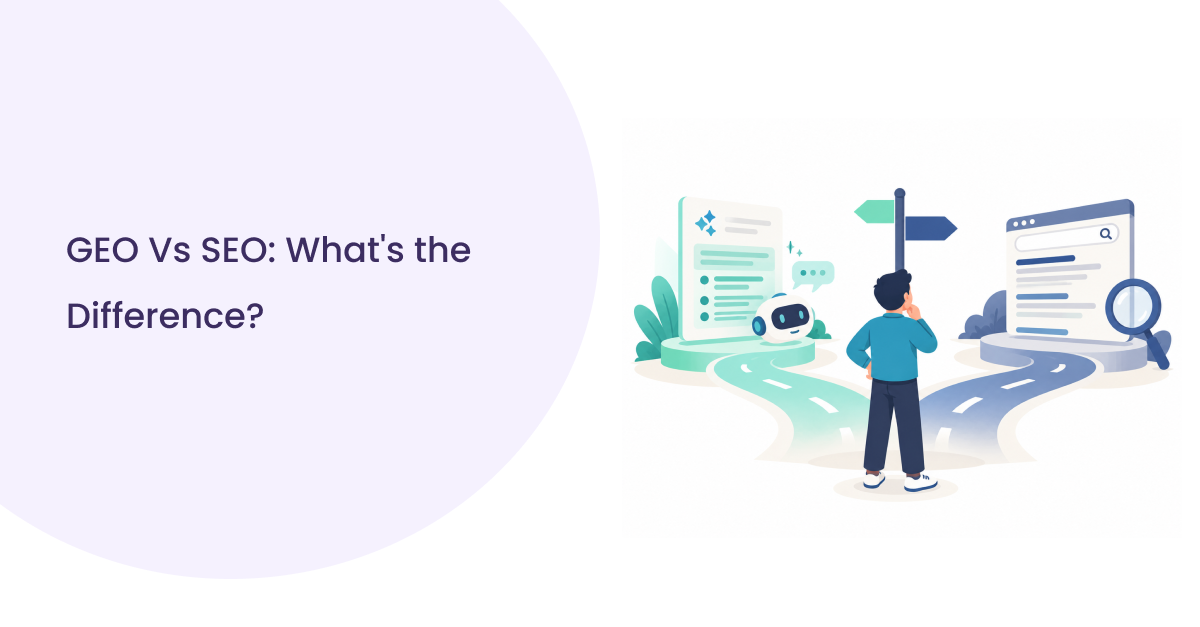
Web Search APIs vs AI Search: At a Glance
| Factor | Web Search API | AI Search | SERP API with MCP |
| Primary purpose | Web retrieval | AI-oriented retrieval | SERP and rank data |
| Typical output | URLs, snippets, metadata | Ranked content and context | Rankings, SERP features |
| AI agents | Good | Excellent | Excellent |
| RAG | Good | Excellent | Good |
| SEO | Good | Moderate | Excellent |
| Control | High | Medium to High | High |
| Content extraction | Often separate | Often integrated | Not included |
Need actual rankings? Use a SERP API.
Need raw retrieval with full control? Use a Web Search API.
Need information already shaped for an LLM? Use AI native search.
Need search plus synthesis in one call? Use a research API.
Web Search APIs vs AI Search is not about which sounds smarter. It is about who owns the extraction and ranking work, you or the provider, and how fast your team needs results shipped to production.
Most engineering leads pick the wrong option here because they compare price tags instead of comparing the actual engineering hours each choice adds to the roadmap once you factor in maintenance.
Web Search API vs AI Search: What’s Actually Different?
Web Search APIs
A standard web data API follows one path. Query goes in, the engine searches, results get ranked, and you receive URLs plus snippets.
Your application still crawls each page, extracts the text, cleans the HTML, and decides what actually matters. That is real engineering time on every build, not a one-time cost.
AI Search and AI Native Search
AI Search is the broad category. AI native search is infrastructure built specifically for AI applications from day one.
It runs semantic and hybrid retrieval, reranks results by true relevance instead of click history, extracts content automatically, and returns context an LLM can use without a cleanup step.
Where SERP APIs Fit
SERP APIs solve a different problem entirely. They exist for rankings, result page structure, featured snippets, and location specific results.
If your product tracks where a page ranks, this is the tool, not AI web search and not a general Web Search API.
The Architectural Difference
Traditional path: search, get URLs, fetch pages, extract, rerank, feed the LLM. AI native search path: query, retrieve, rerank, extract, deliver ready context. That gap is the whole Web Search APIs vs AI Search decision in one picture.
Web Search API vs AI Search: Key Differences
Query Understanding and Search Intent
A web data API typically matches keywords and little else. AI native search parses natural language, expands the query, and understands intent behind a phrase like “best CRM for a five-person sales team” without you writing that logic yourself.
Teams building agents often underestimate how much of their prompt engineering time actually goes toward compensating for weak query expansion on the retrieval side.
Retrieval and Ranking
Keyword retrieval pulls exact matches. Semantic retrieval pulls meaning. Hybrid retrieval blends both, then a reranker scores results by relevance to the actual query.
AI web search platforms run this stack natively. Web Search APIs usually leave reranking to you.
Search Results vs LLM Ready Content
A link and a two line snippet are not the same as a clean passage an LLM can cite directly. Most Web Search APIs vs AI Search confusion starts here, because teams assume search means the same output everywhere. It does not.
Content Extraction
After a traditional search call, someone still fetches the page, strips ads and navigation, and pulls the real text. This is where Web Search APIs vs AI Search differ.
AI-oriented search runs this extraction as part of the response, cutting a full engineering step out of the build entirely.
This single step usually eats the largest share of engineering time on any team building their own retrieval layer from scratch.
Freshness and Citations
Freshness depends on crawl frequency, not the API label. A provider indexing hourly beats one indexing weekly regardless of marketing.
Citation accuracy matters just as much, since one wrong source can erode trust in the whole Web Search APIs vs AI Search output fast.
Control, Latency and Reliability
| Control Point | What It Affects |
| Domain filters | Which sources get included |
| Geography and language | Regional accuracy |
| Recency settings | How current results are |
| Rate limits | How much your app can scale |
| Uptime | Whether production traffic stays stable |
High control usually means more setup work. Medium control usually means faster launch. Neither wins universally; in Web Search APIs vs AI Search, it depends on your team’s bandwidth and timeline.
Teams shipping fast tend to accept medium control early, then renegotiate for tighter filters once traffic proves the product works.
Which Search Approach Fits Your Industry and Use Case?
| Industry | Typical Use Cases | Best Fit |
| SEO and Marketing | Rank tracking, keyword research | SERP or Web Search |
| AI SaaS and Agents | Autonomous research, agent workflows | AI native Search |
| RAG and Enterprise AI | Knowledge assistants, support bots | AI Search |
| Market Intelligence | Competitor and trend monitoring | AI Search |
| Developer Tools | Documentation, troubleshooting | AI Search plus Web Search |
| E commerce | Product discovery, price comparison | Hybrid |
| Finance | Company and regulatory research | AI Search plus specialized data |
| Legal and Compliance | Case and regulatory research | AI Search plus authoritative sources |
| Healthcare | Literature and research discovery | AI Search plus specialized databases |
| Media and Journalism | News monitoring, fact checking | AI Search |
| Sales Intelligence | Account and prospect research | AI Search |
| Cybersecurity | Threat and vulnerability research | AI Search plus security feeds |
When Web Search Wins
- Pick a Web Search API for raw results, SEO tooling, or high-volume, simple queries where full control matters more than convenience.
- Web Search APIs vs AI Search depends on whether you need raw retrieval or managed context.
- Teams that already run extraction infrastructure rarely benefit from switching, since the sunk engineering cost already covers what a managed layer would replace.
- An SEO platform tracking ten thousand keywords a day needs raw ranking data, not synthesized answers, so paying for AI-layered features here just adds cost without adding value.
When AI Search Wins
- Pick an AI web search layer for agents, RAG pipelines, and research tools handling complex questions. The right architecture depends on what your application needs, not simply whether it uses AI.
- A support bot needs ranked, extracted passages more than raw search links, and that distinction should guide the buying decision rather than brand reputation or marketing.
- Finance and legal teams face the same issue, as extracted answers save far more time than reviewing a list of links. This is the core of the Web Search APIs vs AI Search decision.
Web Search API vs AI Search for AI Agents and RAG
Traditional Web Search Workflow
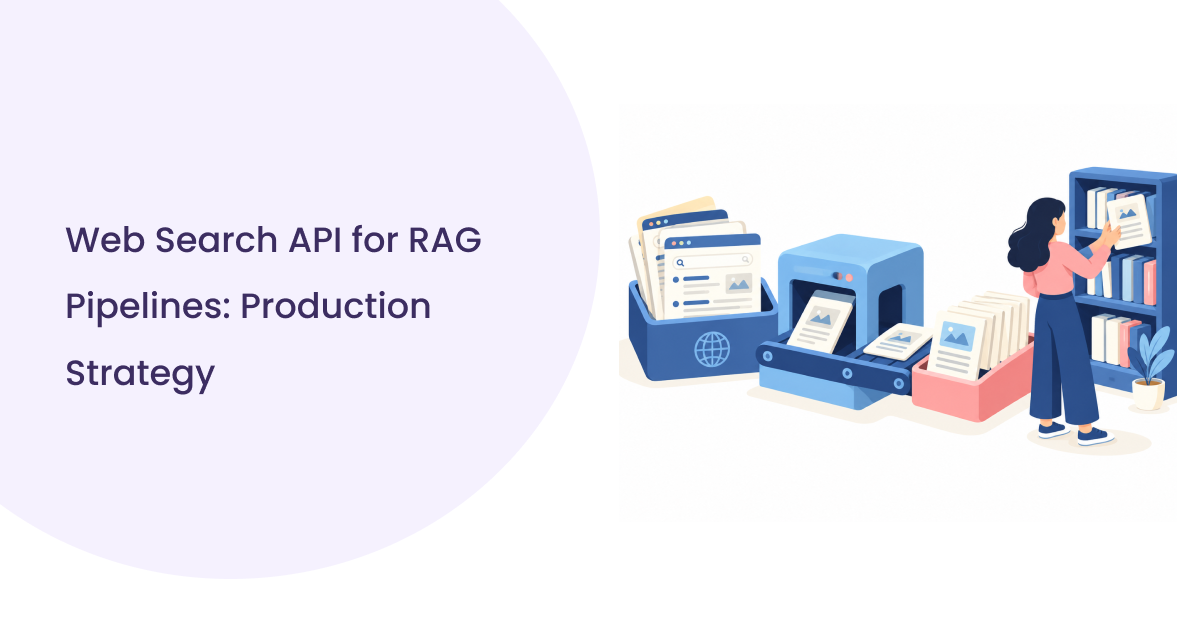
Search, collect URLs, crawl each page, extract text, process and clean it, then feed the LLM. Every one of those steps is code your team owns, tests, and maintains long-term as pages change structure.
A single site redesign on a key source can silently break your extraction logic for weeks before anyone notices the output quality dropped. This is the hidden cost most buyers miss with a web data API.
AI Search Workflow
Query, retrieve, rerank, extract, deliver to the LLM. Three fewer owned steps compared to the traditional flow, and that difference compounds fast once you run thousands of agent calls a day across a live product.
Fewer owned steps also means fewer places where a silent failure can sit undetected in production. This gap is why Web Search APIs vs AI Search matters most once an agent runs at scale.
When Should You Build Your Own Retrieval Layer?
Build your own when you need maximum control, custom ranking logic tied to proprietary signals, or predictable behavior a third party cannot guarantee at your scale.
Regulated industries often land here first, since audit requirements make an opaque third-party pipeline a real liability rather than a convenience.
When Should You Outsource Retrieval?
Outsource when time to market matters more than owning the pipeline, or when fresh web information without maintaining crawlers frees your team for product work instead.
Most early-stage teams choose this path, then reevaluate once usage justifies the engineering investment a fully owned layer requires.
What Should You Evaluate Before Choosing a Search API?
Search Relevance
- Test precision and recall on your actual queries, not the vendor’s demo queries. Long tail and complex multi-clause questions expose weak retrieval fast, so run your ten hardest real queries before signing anything.
- Vendors optimize demos around easy queries, and that gap between demo performance and production performance is where most buyers get burned six months into a contract.
Freshness
- Check crawl and index frequency directly instead of trusting the sales page. A provider that cannot state their refresh cadence in plain terms is probably not refreshing as often as claimed.
- News, finance, and cybersecurity products need hourly or faster refresh, while research tools can often tolerate a daily cycle without any real loss of accuracy. This is one of the clearest Web Search APIs vs AI Search gaps buyers overlook.
Content Quality
- Look at extraction quality on messy pages, not clean blog posts. Metadata accuracy and HTML cleanup quality separate strong providers from weak ones immediately once you feed them a real, cluttered page.
Citation and Source Quality
- Accurate citations and diverse sources build trust in the output. A tool pulling from the same five domains every time limits how useful the answer actually is for research heavy products.
- Ask any vendor for a sample of source diversity across a hundred queries before committing, since this single metric predicts user trust better than almost any other benchmark on this list.
Latency and Reliability
- Response time, uptime, rate limits, and how the API handles retries under load all decide whether this survives production traffic or falls over during a genuine usage spike.
Control and Customization
- Domain filtering, geography, language, and ranking controls determine how much you can tune output without waiting months on a vendor’s roadmap to ship a feature you need today.
Scalability and Developer Experience
- Check queries per second limits, concurrency handling, SDK quality, and documentation depth. A strong web data API paired with weak documentation still slows your team down during integration and every future debugging session.
What Does Web Search vs AI Search Really Cost?
API Pricing Isn’t the Full Cost: A price per thousand searches number hides the real bill.
The comparison only means something once you add everything that happens after the API responds and lands in your application.
Hidden Costs of Web Search: Page fetching, crawling, parsing, extraction, and reranking infrastructure all sit on your team’s plate, plus the engineering hours to build and maintain them across every future site layout change.
Most teams underestimate the ongoing maintenance line item, since a crawler that worked fine at launch quietly breaks as target sites redesign their pages over time.
Hidden Costs of AI Search: web data API pricing plus token costs for any LLM step, provider dependency, and sometimes less granular control than a fully owned pipeline gives a team that wants every setting exposed.
Provider dependency also means your roadmap partly depends on someone else’s release schedule, which some teams accept happily, and others find hard to plan around.
Compare Cost Per Useful Answer: Total cost equals API fees plus infrastructure plus engineering plus processing plus LLM spend.
The cheapest Web Search APIs vs AI Search line item rarely wins once every hidden cost gets added up honestly.
Run this math before signing any contract, because the sticker price rarely matches what finance sees on the invoice six months later.
How to Choose the Right Search API for Your Product
Choose a Web Search API if you need raw results, full control, and you already run extraction infrastructure in-house that a managed layer would only duplicate at extra cost.
Choose AI native search if you are building agents or RAG, and you need LLM-ready content without owning the extraction pipeline yourself or hiring a team to maintain it.
Choose a SERP API if you need actual ranking positions and SERP feature data for SEO software.
Choose a hybrid stack if your product needs SERP data, content research, and both structured and unstructured outputs in a single workflow. In Web Search APIs vs AI Search, Most mature products eventually land here, since a single tool rarely covers rank tracking and agent research equally well over the long run.
How SERPHouse Makes Search Easier for AI Agents
SERPHouse gives enterprises managed web search infrastructure without the cost of building and maintaining crawlers, extractors, and ranking systems.
- Web Search API: Retrieve relevant, fresh web data with domain, geography, and recency controls.
- MCP: Connect search directly to AI agents and RAG workflows through one integration.
- API + Extraction: Get ranked, LLM-ready content without separate search and extraction calls.
- Managed Infrastructure: Scale across agents without maintaining your own crawling stack.
SERPHouse combines API, MCP, web search, extraction, and reranking into one managed layer, helping teams ship AI web search faster with less engineering overhead.
Conclusion
Web Search APIs and AI Search solve different problems, so the right choice depends on what your product needs from search results. If you need raw SERP data, rankings, or greater control, a Web Search API gives your team the building blocks.
If you need ranked, extracted, and LLM ready context for agents or RAG, Web Search APIs vs AI Search comes down to how much engineering work you want to handle. AI Search reduces the engineering work required.
The decision should consider relevance, freshness, scalability, infrastructure, latency, and total cost. Benchmark both against real workloads before choosing the approach that best fits your product, team, and growth plans.
FAQ
Which is better for AI agents, Web Search API or AI Search?
AI Search is usually better for AI agents because it delivers ranked, extracted, and LLM-ready content, reducing the need for separate crawling, extraction, cleanup, and ranking workflows.
Is AI Search more expensive than a Web Search API?
AI Search can cost more per request, but the overall cost may be lower because you avoid building and maintaining crawling, extraction, ranking, and content-processing infrastructure.
Which is better for RAG?
AI web search is generally better suited for RAG because it provides relevant, reranked content that can enter retrieval pipelines directly, reducing preprocessing and improving context quality for generation.
When should I use a SERP API instead of AI Search?
Use a SERP API when your application needs raw search results, ranking positions, advertisements, snippets, or SERP features rather than cleaned, ranked content designed for AI workflows.
Can I use Web Search and AI Search together?
Yes. A hybrid approach can provide raw search data for applications requiring control while using AI Search for agent workflows that need ranked, extracted, and LLM-ready context, making Web Search APIs vs AI Search a practical choice based on each workflow’s requirements.
What should I benchmark before choosing a search API?
Benchmark relevance, latency, freshness, extraction quality, crawl frequency, rate limits, pricing, and performance against real production queries. Test representative workloads rather than relying only on vendor benchmarks.