
Table of Contents
Table of Contents
Ecommerce competition is no longer limited to pricing or keywords. Product visibility now depends heavily on images, marketplace presence, and how products appear across visual search results.
That is why more brands are using a Google Image API for Competitor Monitoring to track competitor listings, monitor pricing activity, and understand how products gain visibility across marketplaces. Instead of relying only on manual checks or text-based tracking, ecommerce teams are starting to use visual search data as part of their monitoring workflow.
Why Visual Competitor Monitoring Matters
Shopping behaviour has changed. Customers often notice the product image before they read the title, price, or description. In marketplaces and Google Images, visuals are now part of the buying decision, not just product presentation.
Product images influence buying decisions
A strong product image can change click behaviour instantly. Shoppers compare design, packaging, color, and presentation within seconds.
This is why ecommerce brands monitor visuals closely. A competitor updating product photography, packaging, or listing style can impact visibility and conversions even when pricing stays the same.
Images are no longer supporting content. In many categories, they are the first signal customers respond to.
Limits of traditional competitor monitoring tools
Most competitor monitoring tools focus on text data. They track keywords, prices, or product titles, but often ignore visual changes.
That creates blind spots.
A seller might reuse your product images, launch duplicate listings, or improve visual presentation before changing any text. Traditional monitoring tools usually miss those signals because they are not built for image-based tracking.
Rise of visual-first ecommerce search
Search behaviour is becoming more visual across US marketplaces and search engines. Users now discover products through image carousels, Google Images, and visual search experiences instead of only typing keywords.
This shift is changing ecommerce competitor analysis. Brands are starting to track where product images appear, how competitors gain visibility, and which listings dominate visual search results.
That is where a Google Image API becomes valuable. It turns visual search activity into structured data that teams can actually monitor and compare.
What Google Image APIs Can Track
Most ecommerce monitoring systems still focus heavily on text data. Product titles, pricing, and descriptions are easy to compare, but visual changes often go unnoticed. That’s why many brands are now using a Google Image API for Competitor Monitoring to track how products appear across search engines and marketplaces.
Product image tracking across marketplaces
A single product image can appear on Amazon, Walmart, eBay, Shopify stores, and smaller marketplaces at the same time. Tracking those appearances helps brands understand where products are being listed and how competitors are positioning similar items.
This type of product image monitoring helps with:
- Detecting unauthorized marketplace listings
- Monitoring reseller activity
- Comparing competitor product presentation
A Google Images API or image search API makes this easier by collecting visual search data from multiple sources instead of relying on manual checks.
Product availability monitoring
Stock visibility changes quickly in ecommerce, especially during seasonal campaigns or product launches. Listings disappear, move between sellers, or return with updated pricing.
Using a Google Image API for Competitor Monitoring, brands can detect these changes earlier through visual listing activity. In many cases, image movement appears before product feeds or catalog pages are updated.
This improves Google Shopping image monitoring and gives ecommerce teams a clearer view of marketplace activity without manually checking every product page.
Reverse image monitoring for duplicate listings
Duplicate listings are one of the biggest challenges in ecommerce competitor monitoring. Sellers often reuse product images to create copycat listings or unauthorized storefronts.
A reverse image search API helps identify where the same product image appears across the web. Combined with a Google image scraping API, brands can monitor image reuse, seller duplication, and suspicious marketplace activity through structured visual search data instead of manual searches.
Using Google Image APIs for Price Monitoring
Price changes in ecommerce rarely happen in isolation. Sellers update listings, swap product images, bundle products differently, or relist items across marketplaces. In many cases, visuals change before pricing data becomes obvious through standard tracking systems.
That’s why many brands now use a Google Image API for Competitor Monitoring as part of their pricing intelligence workflow.
Tracking products across multiple sellers
The same product often appears under different sellers with slightly different titles or descriptions. Text-based tracking can miss these variations, especially across large marketplaces.
Visual tracking solves this by following the product image itself. A Google image search API helps ecommerce teams identify where products appear, which sellers are listing them, and how pricing changes across platforms.
This becomes especially useful for:
- Marketplace monitoring across Amazon and Walmart
- Identifying unauthorized resellers
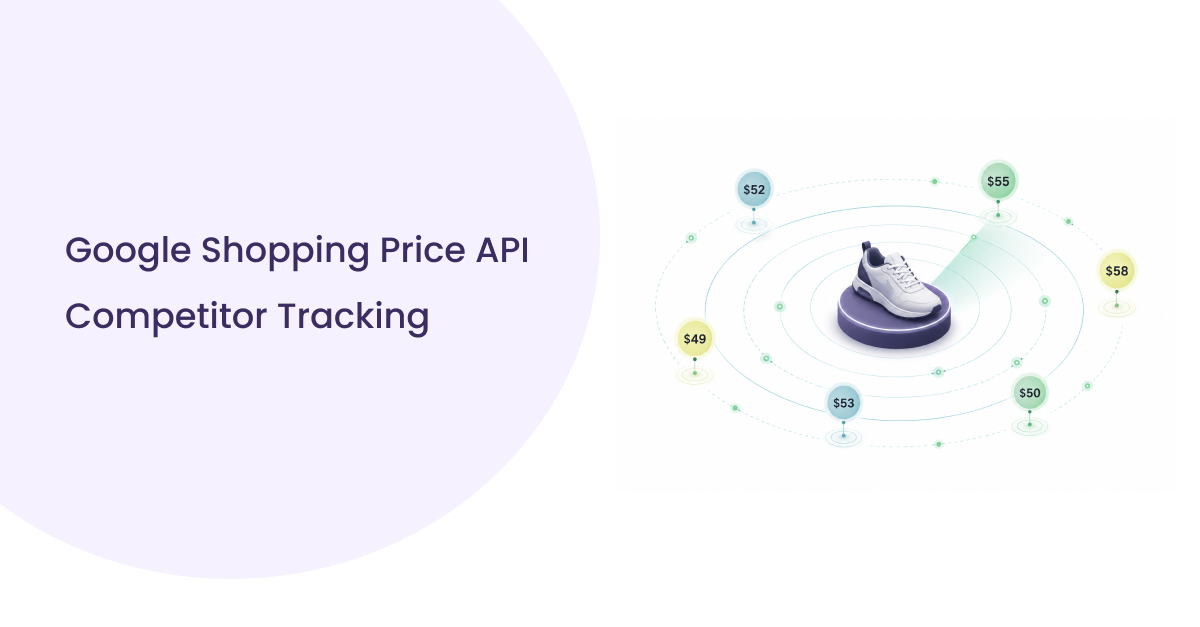
- Comparing competitor pricing strategies
Detecting pricing changes through image listings
Price updates are often tied to listing activity. Sellers may update thumbnails, promotional banners, or packaging visuals during discounts or stock changes.
Using Google image search data, teams can detect movement in product listings that signals pricing shifts before manual checks catch them. This improves ecommerce competitor monitoring by connecting visual changes with marketplace activity in real time.
Connecting visuals with pricing intelligence
Pricing intelligence works better when visual context is included. A product image reveals packaging updates, bundle variations, discount badges, and placement differences that standard crawlers may overlook.
This is where a Google Images API becomes useful. Instead of tracking only numbers, ecommerce teams combine image visibility with pricing data to understand how competitors position products across search and shopping platforms.
For brands handling large catalogs, this creates a more complete view of product visibility, pricing behavior, and marketplace competition.
Visual Search Tracking for Ecommerce SEO
Visual search is changing how products are discovered online. In many ecommerce categories, users now interact with product images before they ever visit a product page. Google Images, shopping carousels, and visual search results are becoming part of the search journey itself.
That shift has changed how ecommerce brands approach SEO. Rankings are no longer limited to blue links. Product visibility now depends heavily on image presence across search results.
How products appear in Google Images
Product visibility in Google Images is influenced by more than just the image itself. Google evaluates multiple signals before deciding which product images appear higher in search results.
A product can rank differently across regions, marketplaces, or keyword variations even when the image stays the same. For example, a product listing performing well in Texas may not hold the same visibility in California if search demand and marketplace competition differ.
| Visibility Factor | Impact on Product Rankings |
| Image relevance | Helps match products to user searches |
| Product page quality | Stronger pages improve image visibility |
| Freshness of content | Updated listings often perform better |
| Marketplace presence | Products appearing across trusted sites gain stronger visibility |
| User engagement | Click behavior can influence image placement |
This is why ecommerce brands are paying closer attention to visual search tracking, especially in competitive product categories where image visibility directly affects clicks and conversions.
Image ranking tracking across keywords
Image rankings shift constantly. A product image that performs well for one keyword may disappear completely for another variation.
Tracking these movements manually is difficult because rankings change based on query intent, device type, and search behavior. An image search API helps ecommerce teams monitor image ranking tracking across keyword groups and identify which products are gaining or losing visibility over time.
This becomes especially useful during seasonal campaigns, product launches, or competitive pricing periods when image visibility changes quickly.
Measuring competitor visibility with the visual search api
Competitor visibility is no longer limited to product titles or ads. Product imagery itself has become a competitive layer in search.
A visual search api allows teams to measure:
- Which competitor products dominate image results
- How often competitor listings appear across keyword sets
- Where image visibility overlaps between brands
This creates a clearer view of ecommerce competitor analysis because visibility is measured through actual product discovery patterns, not just traditional rankings.
For brands monitoring large catalogs, visual search tracking provides insight that text-based monitoring tools often miss entirely.
Marketplace Monitoring with Image Data
Marketplace competition changes faster than most ecommerce teams realize. New sellers appear daily, product listings get duplicated, and pricing shifts happen quietly across platforms. Text-based monitoring catches part of it, but visual tracking often reveals changes earlier.
This is why many brands now use the Google Image API for Competitor Monitoring to track how products move across marketplaces, rather than relying solely on keyword or title tracking.
Tracking products across marketplaces
The same product rarely stays in one place. A listing that starts on Amazon may quickly appear on Walmart, eBay, or smaller niche marketplaces through resellers and third-party sellers.
Image-based tracking helps teams identify where products appear without relying entirely on product titles, which sellers often change or rewrite.
| Monitoring Area | Why It Matters |
| Product image tracking | Detects listings using the same visuals |
| Marketplace visibility | Shows where products are gaining exposure |
| Seller overlap | Identifies repeated listings across platforms |
| Product availability monitoring | Tracks disappearing or newly active listings |
This type of tracking gives ecommerce teams a clearer picture of marketplace activity beyond standard product feeds.
Detecting new competitor listings
New competitors rarely announce themselves. Most appear quietly through new listings, copied product images, or aggressive marketplace expansion.
A reverse image search API helps brands detect these changes early by identifying where similar or identical product visuals begin appearing online.
Instead of manually searching marketplaces one by one, teams can monitor:
- Newly indexed competitor products
- Duplicate product listings
- Marketplace expansion activity
- Changes in product presentation or packaging
This improves ecommerce competitor monitoring because it focuses on actual product visibility, not just text-based rankings or pricing changes.
How Google Image APIs Work
Visual tracking works differently from standard keyword monitoring. Instead of focusing only on product titles or descriptions, the system analyzes how products appear visually across Google Images and marketplaces.
A Google Image API for Competitor Monitoring helps ecommerce teams turn visual search activity into structured data that can support competitor tracking, pricing analysis, and marketplace monitoring.
Query input and image matching
The process usually starts with a keyword, brand name, or product image. The system then searches for visually related matches across indexed results.
This becomes important because sellers often change titles or descriptions while continuing to use the same product images. Traditional keyword monitoring tools can miss those listings completely.
An image search API helps identify:
- Reused product images
- Similar competitor listings
- Duplicate marketplace entries
- Visual overlap between brands
That gives ecommerce teams a more reliable way to track products beyond text-based searches.
Filtering results by marketplace or region
Not every search result matters equally. Brands usually need to isolate visibility based on marketplace, seller type, or region.
For example, a product may perform strongly on Amazon while showing very little visibility on Walmart or niche marketplaces. Without filtering, those differences are difficult to spot.
This type of filtering helps with:
- Marketplace monitoring
- Seller visibility analysis
- Regional product tracking
- Ecommerce competitor monitoring
Instead of looking at broad averages, teams can focus on where visibility is actually changing.
Structuring Google image search data
Raw image results are difficult to work with unless the data is organized properly.
A Google image scraping API typically structures information into fields like image URLs, source pages, ranking positions, and marketplace references. That structure makes the data usable for reporting, monitoring, and long-term tracking instead of manual review.
What Data You Can Extract
Image monitoring is not only about finding pictures online. The real value comes from understanding how those visuals connect with product visibility, seller activity, and marketplace competition.
Image URLs, titles, and rankings
One of the most useful parts of Google Image Search data is visibility tracking. Teams can monitor where product images appear and how rankings change across keyword groups.
This helps brands understand:
- Which products dominate image search
- Which competitors gain visual visibility fastest
- How image rankings shift during campaigns or launches
That insight is difficult to get through text-based tracking alone.
Marketplace and seller visibility data
Image tracking also reveals where products are being sold and which sellers are gaining traction.
A Google Image API for Competitor Monitoring can help identify:
- Unauthorized marketplace sellers
- Duplicate product listings
- Competitor expansion into new marketplaces
- Repeated image usage across platforms
This creates a clearer view of marketplace competition than standard catalog tracking.
Metadata for product tracking
Metadata adds context around product visibility and movement. This can include indexing patterns, marketplace references, or image relevance signals.
For ecommerce teams managing large catalogs, this supports:
- Product image monitoring
- Reverse image search API workflows
- Product availability monitoring
- Long-term ecommerce competitor analysis
Without structured metadata, teams end up collecting screenshots instead of actionable insights.
Choosing the Right Google Images API
Not every API handles ecommerce monitoring well. Some return incomplete image results, others struggle with freshness, and many become unreliable once product catalogs grow. For ecommerce teams, the goal is not just collecting image data. It’s getting consistent data that can support daily monitoring workflows.
Accuracy and result freshness
Image visibility changes quickly in ecommerce. A product can move up in Google Images, disappear from shopping results, or appear under a new seller within hours.
That is why result freshness matters as much as accuracy.
A reliable Google Image API for Competitor Monitoring should consistently return updated image rankings, marketplace visibility, and source data without major delays. Otherwise, teams end up reacting to outdated information instead of current market activity.
Good monitoring systems usually help teams track:
- Newly indexed product listings
- Changes in image rankings
- Product visibility shifts across marketplaces
- Emerging competitor activity
Without fresh data, ecommerce competitor monitoring becomes difficult to trust.
Scalability for ecommerce catalogs
Small product catalogs are easy to monitor manually. Large catalogs are not.
As the number of products grows, teams need systems that can process thousands of image queries without slowing down or creating inconsistent outputs. This becomes especially important during seasonal launches, pricing campaigns, or marketplace expansions.
A scalable Google Images API should support:
- Bulk product image tracking
- Large-scale marketplace monitoring
- Continuous image ranking tracking
- Structured output for analytics workflows
The challenge is not just collecting more data. It’s keeping the tracking process reliable as volume increases.

How Ecommerce Teams Use SERPHouse
Many ecommerce teams already track rankings and pricing separately. The problem is that image visibility often sits outside those workflows, even though visual search behavior now influences product discovery heavily.
That’s where SERPHouse fits into ecommerce monitoring workflows.
Combining image data with pricing workflows
Price changes rarely happen alone. Sellers often update product images, promotional visuals, or listing structures alongside pricing adjustments.
By combining image search data with pricing workflows, teams can spot:
- Visual changes tied to discounts or campaigns
- Marketplace visibility shifts during pricing updates
- Competitor product positioning changes
This creates a clearer view of how products compete visually and commercially at the same time.
Reducing manual monitoring efforts
Manual image tracking becomes difficult once catalogues expand across multiple marketplaces.
Instead of checking listings one by one, ecommerce teams use structured image data to monitor product visibility automatically. This reduces repetitive work and makes competitor monitoring more consistent across large product sets.
Supporting large-scale marketplace tracking
Large marketplaces change constantly. New sellers appear, duplicate listings spread, and product rankings shift faster than manual workflows can track.
Teams using a Google Image API for Competitor Monitoring often rely on structured image tracking to monitor:
- Marketplace visibility trends
- Competitor product expansion
- Seller duplication patterns
- Product availability changes
This makes large-scale marketplace tracking more manageable without depending entirely on manual searches or scattered monitoring tools.
Conclusion
Visual search has become part of how customers discover and compare products online. As marketplaces grow more competitive, image-based monitoring is becoming just as important as keyword and pricing analysis.A structured approach using Google Images API workflows helps ecommerce teams track competitor visibility, monitor product movement, and identify marketplace changes earlier. Instead of reacting late, brands gain a clearer view of how products compete across search and shopping platforms.