
Table of Contents
Table of Contents
TL;DR: An MCP server for personal branding transforms AI from a simple writing assistant into a real-time research partner that brings live search insights directly into your content workflow. By using the SERPHouse MCP server, you can discover trending topics, validate ideas, and create more relevant content without spending hours on manual research, making it easier to build a consistent and credible personal brand.
Most personal brands never stand out because they keep repeating what’s already been said. The gap between creating content and creating original insights still exists, and that’s exactly what an MCP server for personal branding helps fill. Consistent publishing helps, but lasting authority comes from sharing original, well-researched perspectives instead of repeating common opinions. An MCP server for personal branding changes that by giving Claude access to live web search data instead of relying only on static knowledge. This guide explains what Claude MCP is, why founders and consultants are adopting an MCP server for personal branding, and the exact prompts that turn research hours into research minutes.
What Is MCP (Model Context Protocol) and How Does MCP Work?
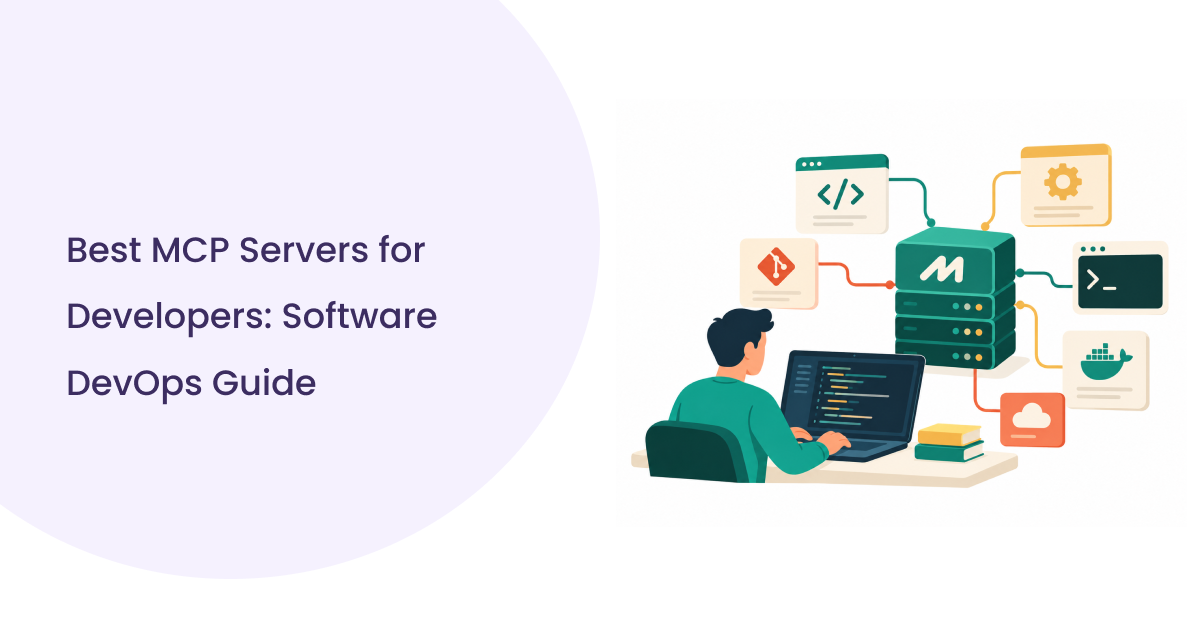
Model Context Protocol (MCP) is an open standard that lets AI models securely connect with external tools, databases, APIs, and search services. Instead of relying only on built-in knowledge, an AI assistant can retrieve real-time information and complete tasks using connected data sources.
An MCP server acts as the bridge between the AI model and external services. When you ask a question, the AI sends a request through the MCP server, which fetches the required data from connected tools or APIs and returns it to the model. This allows AI to generate responses using live, relevant information rather than static training data alone.
To understand why this matters in practice, see how live search data improves AI output beyond static training knowledge.
How Claude MCP Supports Better Personal Branding Research
The SERPHouse MCP server connects Claude to live search infrastructure, allowing it to retrieve real-time information instead of relying only on static training data. By accessing the web search api and connected APIs within your chat, it creates an AI research workflow where you can research, validate ideas, and write without switching tools. As an MCP server for personal branding, it helps founders create accurate, data-backed content faster.
With native MCP support, Claude MCP can validate claims, analyze competitors, and pull live search insights in the same conversation. While it’s a popular starting point, the same MCP server also works with ChatGPT, Perplexity, and other AI assistants.
Why Founders, Executives, and Consultants Need an MCP Server for Personal Branding
A strong personal brand builds long-term trust, and it helps attract customers, reassure investors, and make hiring easier. But consistent, informed content requires reliable research, which is where an MCP server for personal branding makes the biggest difference. Instead of spending hours gathering information manually, founders can use personal branding with AI support to research and publish faster.
How an MCP Server Cuts Research Time
| Task | Manual Workflow | Standard AI Chatbot | MCP Server Workflow |
| Find trending topics | 45 to 60 minutes across multiple tabs | Suggests general trends from training data | Under 5 minutes with live search |
| Check competitor posts | ~30 minutes of manual scrolling | Limited to known information, can’t analyze live posts | Under 5 minutes with sourced summaries |
| Validate a claim before posting | ~20 minutes searching | May provide outdated or uncited information | Under 3 minutes with live citations |
| Draft a weekly research report | 1 hour or more | Requires manual fact-checking | 10–15 minutes with verified, real-time data |
An MCP server for personal branding removes the research challenges, helping founders make faster decisions, identify content opportunities, and build stronger thought leadership. With research handled in minutes, consistent, data-backed publishing becomes much easier.
7 Practical MCP Server Use Cases for Personal Branding

1. Discover Trending Topics Before Everyone Else
- A real-time web search connected through your assistant lets you ask what is gaining traction in your niche within a week.
- Most founders post reactions after a trend peaks, which is the slowest possible entry point. With an MCP server for personal branding, you ask for current discussion volume and publish your take while the topic is still climbing. Real-time news monitoring makes this possible at scale.
2. Research Your Audience’s Pain Points
- An MCP server helps you understand your audience by pulling live insights from forums, Reddit, and comment sections instead of relying on assumptions.
- This is one of the most valuable MCP server use cases, enabling founders to create content based on real customer conversations.
3. Analyze Competitors’ Content Strategy
- Ask your AI assistant to pull a competitor’s recent publishing frequency, common topics, and positioning angle in one prompt instead of opening multiple browser tabs.
- Competitor analysis with an MCP server for personal branding turns scattered research into a side-by-side comparison, helping you identify content gaps and respond faster.
4. Generate Data-Backed Content Ideas
- Generic prompts usually produce generic ideas. By feeding your assistant live search results first, you can generate content angles based on what your audience is discussing right now.
- This research-first approach is one of the most valuable MCP server use cases for anyone doing personal branding with AI support.
5. Validate Your Opinions Before Posting
- Before publishing a strong opinion or statistic, verify it against current sources instead of relying on memory.
- Using an MCP server to fact-check claims helps you create trustworthy, data-backed content and avoid damaging your credibility with outdated information.
6. Create Weekly Research Reports
- Create a recurring prompt that summarizes the biggest industry updates every week. Instead of spending hours reading articles and newsletters, your AI assistant delivers a structured, source-backed report that you can review in just a few minutes.
7. Build a Repeatable Research Workflow
- The biggest advantage of an MCP server for personal branding is consistency. Save your best research prompts, reuse them every week, and build a repeatable workflow for finding insights, validating ideas, and planning content.
Over time, these repeatable MCP server use cases become a reliable MCP server for a personal branding strategy that keeps your content accurate and consistent.
Quick overview:
| Use Case | What It Solves |
| Trend discovery | Spot emerging trends early and publish before competitors. |
| Audience research | Understand real customer pain points using live conversations instead of assumptions. |
| Competitor analysis | Identify content gaps and positioning opportunities with data-backed insights. |
| Content idea generation | Create relevant content ideas based on current market trends, not recycled advice. |
| Opinion validation | Verify claims with live sources to avoid sharing outdated or inaccurate information. |
| Weekly research reports | Replace hours of scattered reading with a concise, source-backed weekly briefing. |
| Repeatable workflow | Build a consistent research system you can reuse every week for faster, more reliable content creation. |
How to Connect an MCP Server to Any AI Chatbot or Tool
An MCP server is not limited to a single AI agent or chat interface. Today, several leading chatbots support MCP connections, allowing you to use the same research workflow across different platforms. Once connected, you can access live search, connected APIs, and real-time research use cases like MCP server use cases without changing how you work.
| AI Assistant | How You Connect MCP | Who Can Use It |
| Claude | Built-in MCP support for connecting external tools | Users on supported Claude plans |
| ChatGPT | Connects through Developer Mode and compatible MCP integrations | Users with eligible paid plans |
| Perplexity | Uses connector-based MCP integrations | Available for supported premium accounts |
| Grok | Supports MCP through compatible connectors | Available for subscribers |
| Gemini | MCP is available within supported Google AI developer environments | Users of compatible Google AI tools |
Universal Config for Desktop Apps
Most desktop apps that support MCP, including Claude Desktop and several code editors, read the same kind of configuration file:
Save this in the app’s MCP settings file, restart the app, and the search tools show up inside your next chat.
Connecting Inside ChatGPT
Open Settings, go to Connectors, and select Create. Paste your MCP server’s HTTPS endpoint into the server URL field, name the connector, and save it.
Connecting an MCP Server to a Custom App or AI Agent
If you are building your own tool instead of using a chat interface, an MCP server still works through a direct API call. The same pattern applies to any AI agent framework that supports remote MCP tools:
Swap the model and endpoint for whichever provider you use; the server itself never has to change. That portability is the real point of an MCP server for personal branding.
Essential Claude MCP Prompts for Research and Content Creation
Prompt for Audience Research
Search current Reddit threads, forums, and Q&A sites for the most common questions people ask about [your topic]. Summarize the top 5 recurring pain points with the exact language people use, and list one source link per point.
Expect a short list of real, current audience pain points in their own words for MCP server use cases, each one backed by a link you can check yourself. This is the prompt to run first when you set up your MCP server for personal branding.
Prompt for Competitor Analysis
Search for recent content published by [competitor name] in the last 30 days. Summarize their main topics, publishing frequency, and one content gap they have not addressed yet.
The output gives you a quick competitive snapshot and, more importantly, a specific gap you can fill before anyone else notices it.
Prompt for Content Gap Analysis
Search for the top-ranking articles and discussions on [your topic]. List 5 questions these sources do not answer clearly, along with a link to each source reviewed.
This prompt surfaces the exact unanswered questions your next post should tackle, which is the fastest route to standing out in a crowded niche when you run it through an MCP server for personal branding.
Prompt for Weekly Trend Reports
Search for the biggest developments in [your industry] from the past 7 days. Summarize the top 3 with one source link each and one sentence on why each matters to [your audience].
Receive a source-backed weekly briefing that you can review in minutes instead of spending hours browsing multiple sources for personal branding with AI.
Prompt for Thought Leadership Content
Search current data and expert commentary on [your topic]. Then help me draft a LinkedIn post that states a clear, slightly contrarian opinion backed by one of the sources found, written in my voice.
This prompt forces the output to take a position instead of staying neutral, which is one of the key MCP server use cases that actually drives engagement and shares.
How SERPHouse MCP Enhances Competitor Analysis Workflows
Monitor Competitors Automatically: Set a standing prompt that checks industry blogs, recent product launches, and trending social conversations on a fixed schedule instead of checking manually. A missed launch announcement from a competitor is a missed conversation you cannot join late.
Find Content Gaps Others Ignore: The most valuable content lives in the questions competitors avoid answering. Ask your assistant to scan recent discussions for emerging angles nobody has claimed yet, then publish them first. An MCP server for personal branding is built exactly for this kind of gap hunting.
How to Systemize Your Content Research Process
Consistent personal branding comes from a repeatable research process, not reacting to every new trend. Use an MCP server for personal branding to build a weekly workflow that keeps your content relevant and data-backed.
| Day | Research Workflow |
| Monday | Use your MCP server to discover trending topics, audience questions, and industry news. |
| Tuesday | Analyze competitor content, identify gaps, and validate key insights with live data. |
| Wednesday | Turn your research into LinkedIn posts, blogs, or newsletters using AI. |
| Thursday | Publish your content and engage with comments to gather new audience insights. |
| Friday | Review content performance, refine your prompts, and prepare next week’s research. |
A repeatable process like this is exactly how you integrate search into your content strategy for the long term, not just a one-time research sprint.
Best Practices for Getting the Most from an MCP Server for Personal Branding
Combine AI Insights with Your Own Expertise
An assistant can hand you sourced data in seconds, but the opinion attached to that data still has to come from you. AI systems are increasingly designed to detect and downrank generic AI-like content, which means the real advantage goes to people who add a genuine point of view on top of research.
For instance, many creators can access the same AI reports on remote work trends, but only those who add personal insight, like what actually worked in their own team, will stand out.
Verify High Impact Information
Treat any number that could embarrass you in public as worth a second check before it goes into a post. A wrong figure shared confidently spreads faster than a correction ever will.
For instance, if you post that 80% of startups fail in the first year, without verifying it, and it’s incorrect or outdated, it can quickly get quoted and questioned across social media, damaging credibility.
Focus on Original Perspectives, Not AI-Generated Opinions
Use your assistant for the research layer and keep the opinion layer entirely yours, since that is the part competitors cannot copy. An MCP server for personal branding should shorten your research time, not replace your judgment.
For instance, multiple creators may use the same MCP server use cases data on AI replacing jobs, but the one who adds a clear stance like AI removes repetitive tasks, not thinking roles, will be the one people remember.
Why Teams Choose SERPHouse for their MCP Server for Personal Branding Work
SERPHouse MCP server for personal branding turns slow research into a real-time AI research system, improving speed, consistency, and content decisions.
- Live SERP API data access (Google, Bing, Yahoo) inside chat.
- Real-time competitor tracking for faster insights through personal branding with AI.
- Keywords with trend discovery in one workflow.
- No-code setup for non-technical founders.
- Faster research workflow, replacing manual browsing.
Want to see it in action? Book a quick walkthrough and explore how it fits into your workflow.
Conclusion
Personal branding is built on consistent, informed content. Frequent posting alone never gets you there. An MCP server for personal branding turns whichever assistant you use into a genuine research partner, giving you faster audience research, sharper content planning, and a stronger claim to thought leadership.
The founders or the person who wins this year are the ones who fix their research process first through MCP. Want to see how this fits your weekly routine? Let’s walk through it together. Start small, stay consistent, and let better research compound into stronger content over time.