
Table of Contents
Table of Contents
TL;DR: A keyword rank tracker only proves its value when the numbers change what your team does next. This comparison looks at Ahrefs, Semrush, SE Ranking, and SERPHouse as working tools for real SEO decisions.
Two teams can check the same keyword on the same morning and see two different rankings. That single fact quietly breaks how most companies choose a Best Keyword Rank Tracker Tools.
A keyword rank tracker works as a decision engine that tells your team where to spend the next hour of SEO effort.
Most businesses buy keyword ranking tools based on price per keyword slot, and that starting question misses the point. The right question asks whether the data stays consistent enough to build a roadmap on top of it.
This guide explains how Ahrefs, Semrush, SE Ranking, and SERPHouse perform as working SERP tracking software, where each one earns its cost, and where each one runs out of value for a specific type of buyer. By the end, you will know exactly which keyword rank tracker fits your team’s actual workflow.
What Actually Matters When Choosing a Keyword Rank Tracker
Five factors decide whether a keyword rank tracker earns its cost. Update frequency, precision, feature coverage, competitor data, and reporting depth matter far more than a single position number.
Ranking accuracy is about consistency
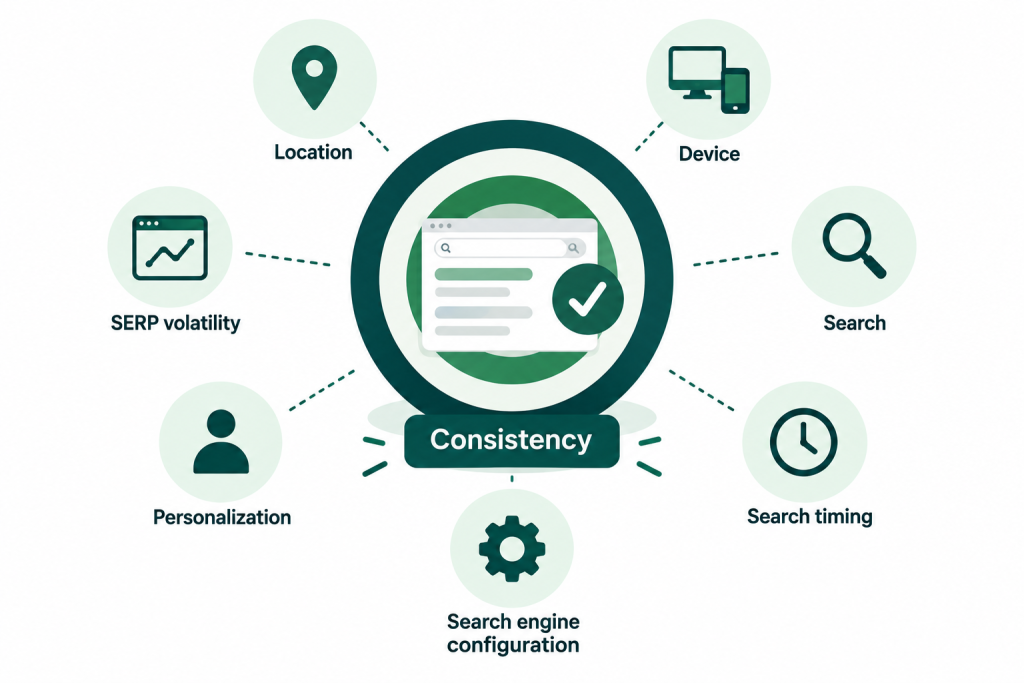
Two tools can report different positions for the same keyword because of:
Location: results shift by city and even by neighborhood in competitive markets.
Device: mobile and desktop SERPs often show different features stacked in different orders.
Search timing: a morning check and an evening check can return different results during volatile periods.
SERP volatility: algorithm updates and news events move rankings within hours.
Personalization: account and browsing signals change what a logged in user sees.
Search engine configuration: index versions do not always sync across every data center at once.
Even Semrush and Ahrefs acknowledge that one absolute true ranking position stays difficult to establish. Consistency across checks matters more than chasing a perfect number from any single Best Keyword Rank Tracker Tools.
The five data points buyers should compare
- Update frequency
- Location and device precision
- SERP feature coverage
- Competitor tracking
- Historical and reporting depth
Buyers comparing keyword ranking tools should weigh these five factors before comparing price. They decide whether a keyword rank tracker functions as real SERP tracking software or just produces a number nobody trusts.
Ahrefs vs Semrush vs SE Ranking vs SERPHouse at a Glance
Choosing among these four keyword ranking tools comes down to buyer type: suite buyer, marketing stack buyer, value buyer, or data infrastructure buyer. This table lines up all four side by side across the categories that actually drive a purchase decision.
| Criteria | Ahrefs | Semrush | SE Ranking | SERPHouse |
| Core positioning | SEO intelligence suite | Marketing visibility platform | Value-focused SEO suite | API first SERP data |
| Rank tracking | Deep, tied to backlink and content data | Daily, tied to competitor intelligence | Reliable, agency-friendly | Programmatic, developer-controlled |
| Update frequency | Daily on most plans | Daily | Daily to weekly by plan | On demand and scheduled |
| Keyword capacity | Moderate, scales with tier | Moderate to high | High for the price tier | Custom, built for real volume |
| Local tracking | Strong location controls | Strong local pack tracking | Strong, agency-oriented | Location parameters via API |
| Mobile and desktop | Both supported | Both supported | Both supported | Both supported |
| SERP features | Detailed feature visibility | Detailed feature visibility | Good coverage | Raw SERP data, build your own view |
| AI visibility | Emerging coverage | Emerging coverage | Limited | Depends on integration built |
| Competitor tracking | Strong, suite-wide | Strong, suite-wide | Strong for the price | Not a dashboard feature |
| Historical data | Deep archive | Deep archive | Solid archive | Depends on storage setup |
| Reporting | Suite-level reporting | Automated client reports | Agency white-label reports | Custom, built internally |
| API access | Available on higher tiers | Available on higher tiers | Limited | Core product, not an add-on |
| Best suited for | Strategic SEO teams | Marketing teams needing full stack | Agencies and value-focused teams | Developers and data teams |
| Main limitation | Cost if only tracking gets used | Cost if the suite goes unused | Less suite depth overall | No built-in dashboard |
| Pricing model | Tiered by keyword volume | Tiered by keyword volume | Tiered, lower entry cost | Usage or call-based |
This table exposes real tradeoffs. The Best Keyword Rank Tracker Tools with the longest feature list doesn’t automatically win the decision.
The Four Tools Solve Different Rank Tracking Problems
Each Best Keyword Rank Tracker Tools answers a different business question, and matching your team to the right question matters more than picking the biggest brand name.
SERPHouse
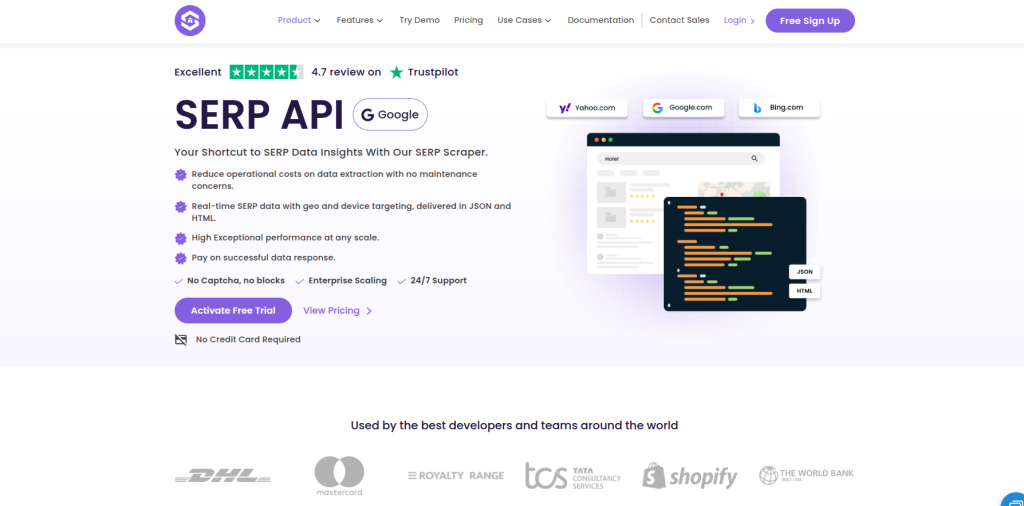
Across every category in this comparison, SERPHouse builds itself as a dedicated keyword rank tracker for teams that want raw control. Ahrefs positions itself as SERP tracking software wrapped inside a much larger SEO intelligence suite, while SERPHouse strips that layer away entirely.
Points worth knowing:
- Delivers raw SERP data through an API, built for teams writing their own logic on top of it.
- Supports programmatic keyword monitoring, so queries run on your schedule, not a vendor’s refresh cycle.
- Fits custom dashboards and workflows because output arrives as structured data, not a locked report.
- Removes a duplicate login for teams that already run internal reporting tools.
- Scales cleanly for developers, agencies, and SEO platforms building their own product on top of ranking data.
Best for: Development teams, agencies building white label reporting, SEO platforms needing raw data at the source.
Pros: Full control over data structure, no wasted dashboard features, usage-based access matched to real need.
Cons: Requires engineering time to build the reporting layer, since it does not hand you a finished dashboard.
When an API first rank tracker makes more sense than an SEO suite
Some buyers do not need another SEO dashboard. They need a pipeline: keyword, SERP request, structured result, database, internal dashboard, automated workflow.
A team with its own dashboard does not need a second one bundled inside a Best Keyword Rank Tracker Tools subscription. SERPHouse fits that exact gap, and it stays the clearest missing option in most rank tracker comparisons published today.
Ahrefs
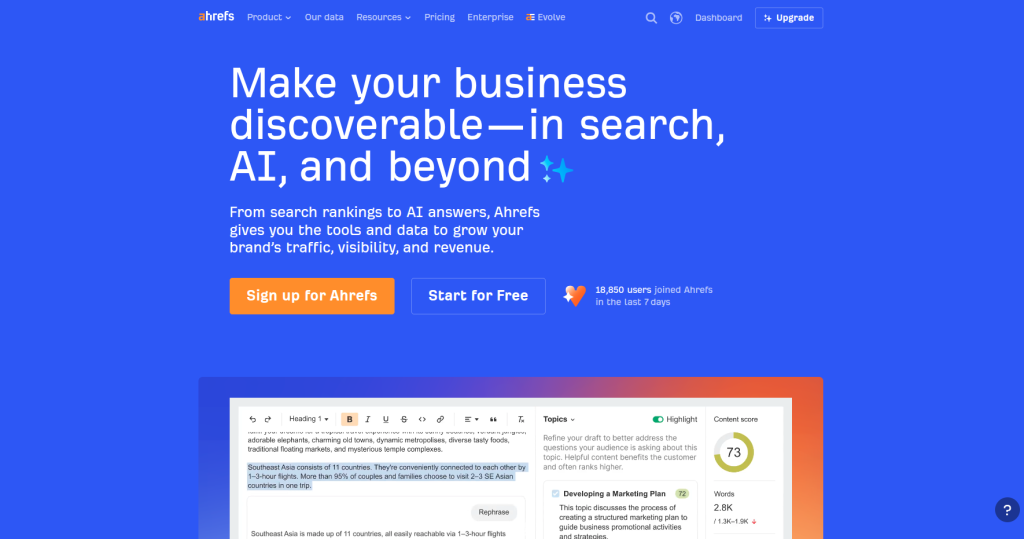
- Position monitoring sits inside a suite already holding backlink, content, and keyword research data.
- Competitor comparison runs side by side with your own tracked keywords.
- Location and device tracking cover the markets your business actually serves.
- SERP feature visibility shows where AI Overviews and other elements now sit above organic results.
- Historical trends stretch back far enough to support long-term reporting.
Best for: Strategic SEO teams already using Ahrefs for backlink and content research.
Pros: Compounding value when the rest of the suite gets used, strong location controls, deep archive.
Cons: Update frequency runs behind a dedicated tracker on some plans, and cost is hard to justify if only tracking gets used.
Ahrefs positions Rank Tracker as part of a broader SEO intelligence platform, with location tracking, mobile and desktop coverage, SERP features, competitor tracking, tags, and visibility reporting.
Where Ahrefs becomes harder to justify
A team that only needs position monitoring pays for capability it never opens. Compare update frequency against a lighter dedicated keyword rank tracker before assuming suite pricing earns its cost, and check honestly whether the backlink and content modules see any real use.
Semrush
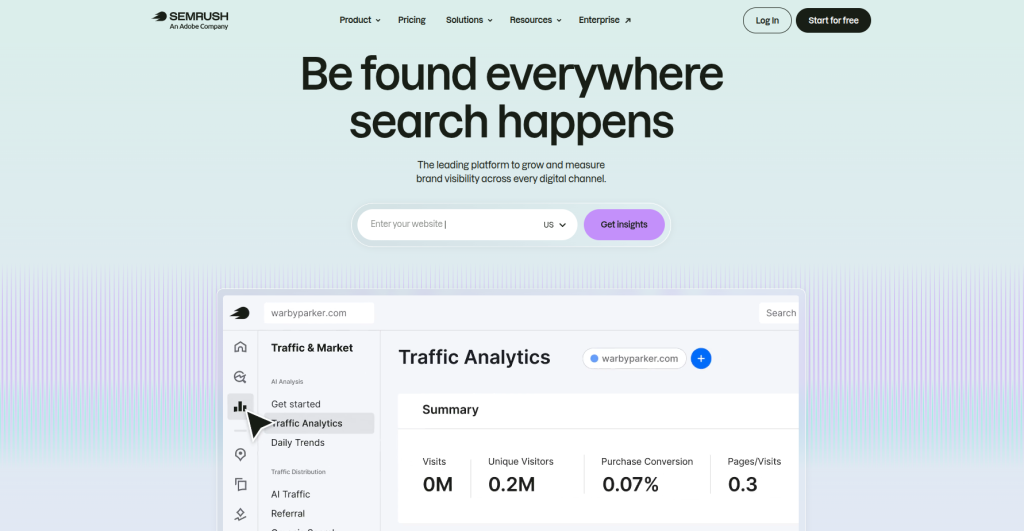
Semrush functions as SERP tracking software tied directly into paid search and content data.
- Daily position tracking keeps pace with fast moving SERPs.
- Competitor monitoring runs alongside paid search and content data in one account.
- SERP feature and visibility tracking show the full picture around a ranking.
- Local tracking covers multi-location businesses without a separate tool.
- Automated client reporting saves agency hours every month.
Best for: Marketing teams running SEO alongside paid search, content, and competitive intelligence in one platform.
Pros: Daily updates, strong automated reporting, deep integration across channels.
Cons: Premium pricing is hard to justify for a team using only the tracking module.
Semrush positions Position Tracking around daily changes, competitor visibility, automated reports, and SERP feature monitoring. Best Keyword Rank Tracker Tools inside Semrush becomes one signal among many the team already watches.
Where Semrush earns its premium
Ask directly whether the business needs a full suite or only ranking data, a distinction every Best Keyword Rank Tracker Tools buyer needs to make before signing an annual contract.
A company already paying for keyword research, competitor intelligence and site auditing extracts far more value from keyword ranking tools bundled inside Semrush than a team buying it purely to watch positions.
SE Ranking
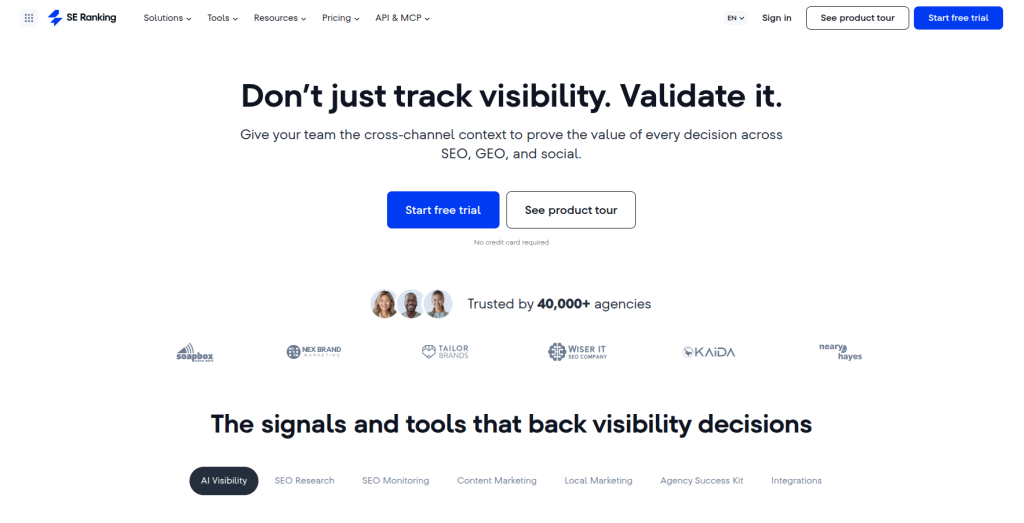
SE Ranking works as straightforward SERP tracking software priced for agencies managing many accounts.
- Rank tracking, competitor monitoring, and local plus global coverage at a lower entry cost than the suites above.
- White-label reporting designed for agencies managing multiple client accounts at scale.
- Keyword capacity per dollar tends to run higher than competing suites.
- Broader platform features exist but stay secondary to the tracking core.
Best for: Agencies and value-focused teams managing many accounts on tight margins.
Pros: Strong value per tracked keyword, solid client-facing reporting, dependable daily updates.
Cons: Suite depth trails Ahrefs and Semrush for teams that eventually need backlink or content research too.
Where SE Ranking makes the strongest business case
Compare tracking capacity, update frequency, reporting quality, and workflow fit against monthly cost, not against a longer feature list.
That single comparison explains why SE Ranking shows up so often as the middle ground pick, and it is the fastest way to judge any Best Keyword Rank Tracker Tools on value alone.
What Rank Tracking Data Should You Actually Trust
Trust methodology and consistency over any single number claiming to be the one true rank. Location, device, timing, volatility, and personalization all shift live search results at once.
Why different tools report different positions
Geographic location changes results block by block in competitive local markets, so a check run from one city rarely matches a check run from another.
Device changes the entire SERP layout, since mobile and desktop often show different features stacked in different order.
Search engine configuration varies across data centers, so index versions do not always sync at the exact moment of a check.
Timing matters because search results move throughout the day during high volatility periods driven by news or algorithm updates.
Search personalization from a logged-in browser session never matches a clean crawl, which makes account-based checks unreliable for reporting.
Tracking frequency decides whether volatility gets caught at all, since a weekly check misses swings a daily check records clearly.
SERP feature changes shift what counts as a strong position, since a new element above organic results changes visibility even when rank stays the same.
Best Keyword Rank Tracker Tools that check daily reflect reality closer than one that checks weekly, and that gap decides whether your reporting matches what customers actually see.
Separate ranking movement from actual visibility
A move from position four to position two sounds like a win on paper. If an AI Overview, an expanded ad block, or a local pack now sits above both positions, the business may not receive proportional additional visibility from that improvement. This stands as one of the most misunderstood concepts in SEO reporting today.
Current SERP tracking competitors increasingly emphasize that rank alone does not describe the complete search surface. A best keyword rank tracker tools needs to show what sits above the number, not just the number itself.
The metrics that deserve executive attention
Visibility and share of voice show total search presence across the full tracked keyword set, beyond any single position.
Top three and top ten distribution reveal concentration risk when too many keywords cluster just outside real visibility.
SERP feature ownership tracks how many results carry an AI Overview, snippet or other element above organic listings.
Estimated traffic opportunity connects position data to a realistic business number leadership can actually use.
Branded versus non-branded performance separates demand you already own from demand you are still earning.
Commercial keyword performance ties rankings directly to revenue generating pages rather than vanity terms.
How to Evaluate Rank Tracking for Local, National, and Enterprise SEO
Local SEO needs city level precision, national SEO needs consistent methodology over time, and enterprise SEO needs scale across domains, markets, and teams with governance built in. Not every one of these keyword ranking tools fits every operating environment equally well.
Local SEO needs location level precision
- A business ranking well nationally can still stay invisible in three of its five priority cities, and a blended national average hides that gap completely.
- City or ZIP level tracking inside a Best Keyword Rank Tracker Tools exposes local performance a national number never shows. Local businesses need SERP tracking software capable of that precision.
National SEO needs trend reliability
- National campaigns depend on consistent methodology held steady over months, since a single snapshot proves nothing on its own.
- Historical trends, keyword segmentation by intent, and competitor movement over time matter more than any one day of data from a rank tracking platform.
Enterprise SEO needs scale and governance
- Enterprise teams manage large keyword sets across multiple domains, markets, devices, and internal teams at once.
- Reporting depth, export access, API availability, deep historical data, and user permission controls carry as much weight as raw position accuracy at this scale.
- Enterprise teams need SERP tracking software built for exactly that scale, and procurement teams should score each Best Keyword Rank Tracker Tools against governance requirements before contract signing.
The Real Cost of Rank Tracking Is Not the Monthly Subscription
The real cost of a keyword rank tracker equals monthly price divided by usable tracked keyword capacity, plus every extra credit, location, and project purchase required to run the full campaign.
Calculate cost per tracked keyword
| Tool | Monthly price | Usable keywords tracked | Cost per keyword |
| Tool A | $129 | 500 | $0.258 |
| Tool B | $139 | 1,000 | $0.139 |
Tool B looks $10 more expensive on the invoice and actually costs 46% less per tracked keyword. A tool priced twenty dollars lower per month is not cheaper if it forces extra credit purchases for locations, devices, competitors, or additional projects.
Divide monthly cost by usable tracked keyword capacity before comparing any two Best Keyword Rank Tracker Tools directly, then run the same math again once refresh frequency and location coverage get factored in. The real cost of any SERP tracking software shows up in usable keyword capacity.
Calculate the cost of unreliable ranking data
Bad data creates costs that never show up on an invoice: wrong content priorities, unnecessary page rewrites, inaccurate agency reporting, missed ranking declines, false wins reported to leadership, and wasted optimization hours across the team.
A ten person SEO team spending even three hours a week reconciling conflicting numbers from a weak keyword rank tracker loses over 150 hours a year to cleanup instead of strategy.
The real question before any renewal is what inaccurate data has already cost the organization in wasted work, not what the subscription costs on paper.
When a Business Has Outgrown Its Current Rank Tracker
Spreadsheet workarounds, manual exports, thin location coverage, and reporting disconnected from business outcomes all signal that a keyword rank tracker has stopped scaling with the business.
Your keyword portfolio has become too large
Manual spreadsheet exports and incomplete tracking work as warning signs, not workflow quirks. When a team tracks a fraction of its real keyword set because the current plan cannot scale, the tool now limits strategy and stops supporting it.
SEO reporting is disconnected from business performance
A report that only says position moved from eight to five tells leadership nothing about revenue impact.
A capable keyword rank tracker connects rankings to traffic, conversions, priority pages, markets, and specific product categories, so the number on the dashboard maps to something the business actually values.
Your SEO team is spending time collecting data instead of acting on it
When analysts spend hours pulling exports and formatting spreadsheets every week, API access stops being a nice extra and becomes the actual purchasing priority. Teams that outgrow manual exports usually need SERP tracking software with direct API access built in, and automation removes that burden from any Best Keyword Rank Tracker Tools workflow entirely.
Which Keyword Rank Tracker Should You Buy
Procurement teams comparing four different keyword rank tracker options should run this matrix before requesting final quotes.
| If you need… | Best fit |
| Deep SEO intelligence around rankings | Ahrefs |
| A broad marketing and SEO platform | Semrush |
| Strong tracking value and agency workflows | SE Ranking |
| Programmatic SERP data and API workflows | SERPHouse |
| Local visibility | Evaluate location precision first |
| Enterprise-scale tracking | Evaluate capacity and governance first |
| Custom reporting or data pipelines | Prioritize API and export capability |
Use this matrix to match your business type against the right keyword ranking tools before requesting quotes. The Best Keyword Rank Tracker Tools changes according to what the organization is actually buying, and that single sentence should guide the entire purchase more than any feature comparison.
Ahrefs vs Semrush vs SE Ranking vs SERPHouse
No single keyword rank tracker wins every category on this list, and that stands as the correct outcome for a decision this specific.
SERPHouse is a good fit for teams that want raw SERP data delivered directly into an internal system, with full control over the structure and no dashboard tied to a fixed report.
Ahrefs works well for teams already using its backlink and content data who want ranking signals within the same workspace.
For broader SEO operations, Semrush is a strong choice when reporting needs to sit alongside PPC, content, and competitive intelligence.
SE Ranking may be the better option when tracking value per dollar and agency reporting matter more than suite depth.
Each of these four keyword ranking tools wins for a different type of buyer. Ahrefs and Semrush win when ranking data lives inside a bigger platform your team already uses daily. SE Ranking wins on pure tracking value. SERPHouse wins when the priority is control over the data itself, which is the exact gap most SERP tracking software on the market still leaves open for teams that outgrow a fixed dashboard.
Connect SERP Data Directly to Your Workflow
SERPHouse delivers structured SERP data through an API, so SEO and development teams can plug ranking data directly into their existing workflows.
- Run programmatic keyword and location queries with structured output.
- Automate alerts, competitor tracking, and internal reporting.
- Send data directly to your dashboards without relying on another interface.
For teams building internal SEO tools, SERPHouse works as a Best Keyword Rank Tracker Tools that fits into the existing stack rather than replacing it. The practical advantage is control: you decide how ranking data is stored, analyzed, and reported.
Conclusion
The best keyword rank tracker is not the one with the longest feature list. It is the one that delivers consistent data at the scale, locations, and workflow your team actually needs.
Ahrefs and Semrush suit teams that want broader SEO intelligence; SE Ranking offers strong tracking value, while SERPHouse fits teams that need direct API access and control over SERP data. Compare real tracking costs, data reliability, and integration needs before committing to any keyword ranking tools or SERP tracking software.
FAQ
Why do different rank trackers show different positions for the same keyword?
Location, device, timing, SERP volatility, and personalization all shift live results at the moment of the check. A Best Keyword Rank Tracker Tools reflects its own crawl conditions, so consistency across checks matters more than matching another tool exactly.
How often should a keyword rank tracker update?
Daily updates catch volatility that weekly checks miss completely. Competitive or fast-moving keywords need daily tracking, while stable long-tail terms tolerate a slower refresh without losing much accuracy.
Is Ahrefs or Semrush better for rank tracking specifically?
Both update daily and cover location, device, and competitor tracking well. The real difference sits in suite fit: Ahrefs leans toward backlink and content context, Semrush leans toward full marketing stack integration.
When does an API based tracker like SERPHouse make more sense than a dashboard tool?
Teams that already run internal dashboards or reporting systems get more value from raw data delivered through an API. It removes a duplicate login and lets developers control exactly how ranking data gets used across their own product.
Does a higher keyword ranking position always mean more traffic?
Not on its own. AI Overviews, expanded ads, and local packs can sit above an improved position, which limits the additional visibility a business actually receives from that ranking gain.
How should local businesses evaluate a keyword rank tracker?
City or ZIP level location precision should be the first filter, since national averages hide major visibility gaps in the specific markets a business depends on for revenue.