
Table of Contents
Table of Contents
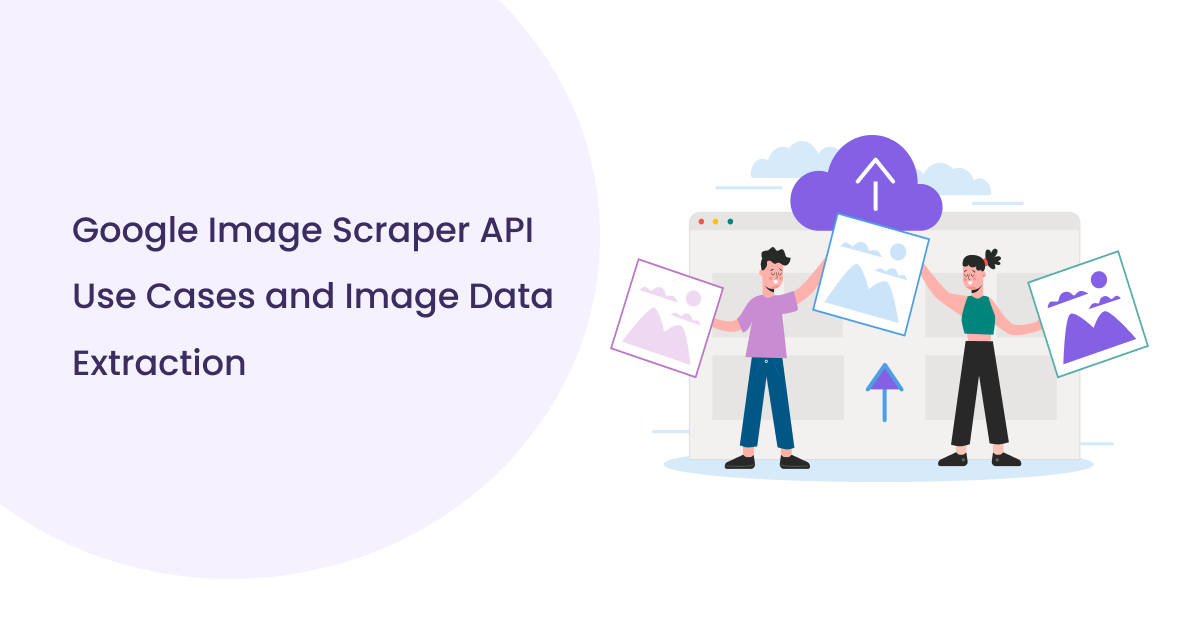
Images are no longer just visual elements. They carry data, intent, and context that businesses can use to understand markets, products, and user behavior. A Google Image API allows systems to access image search results in a structured format, including image URLs, sources, rankings, and related metadata.
Instead of manually browsing results, applications can retrieve visual search data through API requests based on keywords or queries. This makes it possible to analyze how images appear across search results and how they are connected to specific topics.
This is where Google Image API Use Cases become practical. From product discovery to brand tracking, businesses use image data to support decisions that rely on visual insights rather than text alone.
Why Businesses Are Investing in Google Image API Use Cases

The way people search has changed. Users don’t always describe what they want in words. Users actively search for it. Visuals are compared before anything else. Decisions are often based on what is seen first, not what is read.
For businesses, this creates a gap. You can’t rely only on text data anymore. If your products, brand assets, or content are not visible in image results, you’re missing real opportunities. That’s where Google Image API Use Cases start to matter practically.
Think about an ecommerce brand trying to understand why a competitor’s product keeps appearing in image results. Or a marketing team trying to identify which visuals are trending in their niche. Doing this manually is slow and unreliable.
With access to structured visual search data, teams can track how images appear, compare positioning, and understand patterns behind visibility. It turns guesswork into something measurable.
This is not about adding another tool. It is about adapting to how users already behave. Visual data is now part of decision-making, and businesses that use it properly gain a clear advantage.
1. E-commerce Product Search and Visual Discovery
In ecommerce, people don’t always search with perfect keywords. Most of the time, they are trying to find something that looks right. Style, color, shape, and design matter more than exact product names.
This is where visual search starts making a real difference.
With an image search api, platforms can show similar products based on how they look, not just what they’re called. For example, if a user searches for a “white sneakers outfit look,” the system can return multiple visually similar shoes across brands, even if the product titles are completely different.
From a business point of view, this is one of the most practical Google Image API Use Cases. Ecommerce teams can:
- Understand how their product images appear in search
- Compare visual positioning against competitors
- Identify which product images attract more visibility
It also supports ecommerce image analysis by helping brands figure out which visuals actually perform, not just which products are listed.
The result is simple. Better discovery leads to better engagement, and better engagement leads to more conversions.
2. Digital Marketing and Ad Creatives
Creative decisions in marketing are often based on assumptions. Teams test designs, colors, and formats, but without clear visibility into what actually performs across search, those decisions can miss the mark.
Image data changes that.
By using a visual search api, marketers can analyze which types of images appear frequently for specific queries or industries. This gives insight into what kind of visuals are already dominating attention. Instead of guessing, teams can align creatives with patterns that are already working.
For example, a brand planning a new campaign can review image results related to its niche and identify trends in composition, background style, or product placement. This helps in designing ad creatives that feel relevant rather than outdated.
This is one of the more practical Google Image API Use Cases in marketing. It allows teams to:
- Study competitor visuals across campaigns
- Identify trending formats in image results
- Adjust creatives based on real visual data
Over time, this approach leads to more consistent performance. Campaigns are not just creative, they are informed.
Working with a Google Image Scraper APIshifts image data from messy extraction to something structured and dependable.
3. Brand Monitoring and Image Tracking
Brands don’t just live on their own websites. Their logos, product images, and campaign visuals appear across marketplaces, blogs, social platforms, and third-party sites. The challenge is knowing where and how those visuals are being used.
Image tracking solves this problem by turning visual presence into something measurable.
Instead of manually searching, teams can rely on structured visual data to monitor image usage across the web. This helps answer important questions:
- Where is your logo being used outside your control?
- Are your product images being reused without permission?
- How often do your visuals appear compared to competitors?
This becomes especially important for ecommerce and consumer brands. Unauthorized sellers often reuse official product images, making it harder to control brand perception. With consistent tracking, these issues can be identified early.
It also supports brand monitoring images at scale. Companies can track how their visuals appear in search, detect misuse, and understand how their brand is represented visually across different platforms.
Over time, this visibility helps maintain brand consistency, protect assets, and respond quickly when something goes wrong.
4. Content Creation and Media Platforms
Content teams work under constant pressure to publish quickly while keeping visuals relevant. Finding the right image is not just about aesthetics. It affects engagement, readability, and how users perceive the content.
In many cases, the real challenge is consistency. Writers, editors, and media teams need a steady flow of relevant visuals that match the topic and intent of each piece.
With access to structured visual search data, this process becomes far more controlled.
A typical workflow looks like this:
- A topic is finalized for an article or media piece
- Relevant image results are analyzed based on search trends
- High-context visuals are selected based on relevance and usage patterns
- Content is published with images that align with user expectations
This approach reduces random image selection. Instead of choosing visuals based on availability, teams rely on what is already performing in search environments.
It also helps media platforms identify which types of visuals attract attention across different topics. Over time, this creates a more consistent visual strategy.
For content-driven platforms, better visuals do not just improve appearance. They improve how users interact with the content at first glance.
A Google Image Scraperonly becomes valuable when the data it collects is clean enough to actually use.
5. AI and Machine Learning Training Data
Training reliable models depends on one thing more than anything else: quality data. For image-based systems, that means large, diverse, and well-structured datasets.
Many teams struggle at this stage. Collecting images manually is slow, and random datasets often lack consistency. That leads to poor model performance.
Image data sourced from search results solves part of this problem.
- It reflects real-world usage
- It includes variation in style, context, and quality
- It connects images with search intent and relevance
This makes it useful for building datasets used in image classification, object detection, and recommendation systems.
For example, a model trained on product images pulled from real search environments is more likely to perform well in practical scenarios. The data is not isolated. It reflects how users actually interact with visuals.
Another advantage is scale. Large volumes of images can be collected and organized efficiently, making it easier to build datasets that improve over time.
For machine learning teams, the goal is not just more data. It is better data. Structured visual datasets help models learn patterns that are closer to real-world conditions, which leads to more accurate results.
The real value in the features of Google Image APIis not access, but how easily that data can be turned into insight.
6. Real Estate Listings and Property Search
In real estate, visuals carry more weight than descriptions. A user decides within seconds whether a property is worth exploring further, and that decision is almost always driven by images.
This creates a clear challenge for listing platforms. It is not enough to upload property photos. The platform needs to surface the right visuals based on what users are actually looking for.
Here’s how image-based data supports that process:
- Users can discover properties based on visual style, not just filters
- Similar listings can be suggested based on layout, interiors, or design
- Duplicate or low-quality images can be identified and filtered out
For example, someone searching for “modern studio apartment” is not just looking for size or price. They are looking for a specific visual feel. Platforms that understand this can present more relevant listings.
It also helps real estate platforms maintain better listing quality. Images can be analyzed for clarity, uniqueness, and relevance, improving overall user experience.
When visual data is used properly, property search becomes more intuitive. Users don’t just browse listings. They recognize what fits their expectations faster.
A Reverse Image Search APIhelps you understand where an image lives across the web, not just where it started.
7. Travel and Hospitality Platforms
Travel decisions are emotional. People don’t book destinations based on descriptions alone. They respond to visuals that create a sense of place.
For travel and hospitality platforms, this means images are not just supporting content. They are the decision trigger.
A typical use scenario looks like this:
A user searches for a destination like “beach resorts in Bali.” Instead of scrolling through text-heavy listings, they are drawn to visuals first. Bright coastal views, room interiors, and nearby attractions influence which listing they click.
To support this behavior, platforms rely on visual data to:
- Match destinations based on visual preferences
- Highlight properties with strong visual appeal
- Group similar locations using image patterns
- Improve discovery for users who browse visually
This also helps platforms understand what kind of visuals perform better for specific locations. A mountain retreat and a city hotel require completely different presentation styles.
When visual data is used effectively, the browsing experience becomes more natural. Users are not filtering options manually. They are recognizing what fits their expectations through images, which makes the decision process faster and more engaging.
A Google Images Search APIis not just about retrieving images, it is about understanding how visuals are ranked and discovered.
Final Thoughts on Google Image API Use Cases
Visual data is no longer optional in digital decision-making. Across industries, businesses are shifting from text-based analysis to image-driven insights because that reflects how users actually interact with content today.
From ecommerce and marketing to real estate and travel, the pattern is clear. Companies that understand how images appear, rank, and influence behavior are able to make better decisions. They improve discovery, strengthen brand presence, and respond faster to market changes.
This is where Google Image API Use Cases become practical, not theoretical. They allow businesses to move beyond manual processes and work with structured visual data that can be analyzed, tracked, and scaled.
The advantage is not just in collecting images. It is in understanding what those images represent in a competitive environment.
As visual search continues to grow, businesses that adapt early will have a clearer view of how users engage, what drives attention, and where opportunities exist.
FAQs
Is there a free Google Image API?
There is no fully free official Google Image API for large-scale use. Some platforms offer limited free access or trial credits, but full access usually requires a paid plan.
How do I get images from Google programmatically?
You can retrieve images programmatically using an image search API that returns structured data like image URLs, titles, and sources based on search queries.
What is the best way to scrape Google Images?
The most reliable way is to use a Google Image Scraper API instead of manual scraping, as it handles dynamic content, request limits, and data extraction consistently.
Can I use Google Images data for commercial projects?
Usage depends on the source of the images and licensing terms. APIs provide access to image data, but businesses must ensure proper usage rights for each image.
What data can I get from a Google Images API?
You can get image URLs, thumbnails, titles, source links, image ranking positions, and related metadata useful for analysis and application development.