
Table of Contents
Table of Contents
TL;DR
- Google News updates in real time and reveals early signals across industries
- There is no official public Google News API from Google
- Teams access Google News data through scraping or third-party APIs
- Scraping works short-term but is hard to maintain at scale
- APIs provide structured data like headlines, sources, timestamps, and rankings
- Google News data is used for monitoring, alerts, research, and trend detection
- SERPHouse suits teams that need reliable, ongoing access to Google News data
Google News updates constantly. New stories show up every minute across politics, finance, technology, business, and global events. For a lot of teams, this isn’t just somewhere to read the news. It’s where patterns start to form and where early signals show up before they become obvious everywhere else.
The problem is getting to that data in a usable way.
Google News is built for people who scroll, click, and read. It’s not built for systems that need headlines, timestamps, publishers, or rankings in a clean format. There’s no simple public endpoint that lets you pull all of that at scale. And yet, many teams depend on exactly this information to run monitoring dashboards, trigger alerts, or feed research workflows.
Because of that gap, teams usually take one of two paths. Some try scraping. Others look for APIs or managed services. Both approaches work to a point, but they come with tradeoffs around stability, cost, and how much maintenance you’re signing up for over time. Picking the wrong setup often means spending more time fixing pipelines than using the data itself.
This guide breaks down how Google News data actually behaves, what you can realistically extract, and where APIs and scraping differ once you move beyond experiments. The goal here isn’t promotion or shortcuts. It’s to explain the landscape as it really works so you can choose an approach that won’t fall apart later.
How Google News Actually Works
Google News often looks like a straightforward list of headlines, but that’s not how it actually works. Behind the scenes, it continuously pulls stories from thousands of publishers and sorts them as new articles appear. The goal isn’t just to show news. It’s to organize related coverage so people can quickly see what’s happening and who’s reporting on it.
When you search or scroll through Google News, stories about the same event are grouped together. That’s why you might see similar headlines from different outlets in one place. Each article adds another angle or update. It isn’t duplication. It’s how Google News presents a broader picture around a single story.
How Google News Groups and Ranks Stories
Google News decides which articles appear and how they are ordered using a combination of signals that change constantly as new coverage is published.
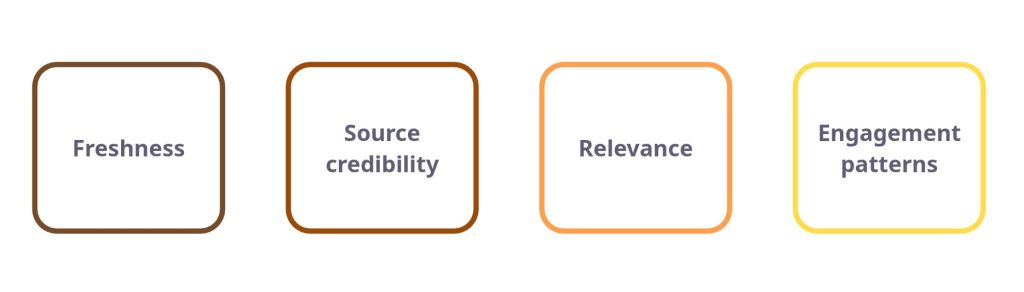
The most important signals include:
- Freshness – newer articles tend to surface first
- Source credibility – established publishers often rank higher
- Relevance – how closely an article matches the topic or query
- Engagement patterns – how users interact with similar stories
This is why Google News is widely used for real-time news monitoring, breaking trend detection, and competitive media analysis. It surfaces relevant coverage much faster than traditional search results.
From a data perspective, each Google News result contains structured elements that teams often want to work with programmatically:
- headline text
- publisher name
- article link
- publish time
- thumbnail image
- topic label or category
- position within the news cluster
Terms like Google News API data fields, news metadata extraction, and structured Google News output refer to these elements being captured and stored for analysis.
This structure is also why scraping Google News is not as simple as pulling HTML from a static page. Layouts change, clusters update in real time, and there is no dedicated developer feed. Any system built on Google News data has to handle that constant movement.
Understanding how Google News organizes and ranks information sets the foundation for real decisions about how to collect and use this data at scale. The next section explains what a Google News API actually is and why many teams choose APIs over traditional scraping.

What Is a Google News API?
A Google News API is a system that lets developers access Google News results as structured data instead of browsing headlines manually. Instead of clicking through stories in a browser, teams can pull articles, metadata, and rankings directly into their own software using automated requests.
When people search for terms like Google News API, Google News data API, or news scraping API, they are usually trying to solve a practical problem. They want programmatic access to live news so they can build tools around it. That might mean running a media monitoring dashboard, tracking brand mentions, detecting breaking trends, or feeding real time headlines into an internal research pipeline.
At its core, a Google News API converts what you see visually in Google News into machine readable output. Instead of cards and story clusters, the API returns clean fields such as headline text, publisher name, publish time, article URL, and ranking position. This structure is what makes automation possible.
Many teams specifically look for:
- Google News API JSON output
- real time Google News data feed
- automated news headline extraction
- Google News search API integration
- live news API for monitoring systems
These long tail searches reflect the same need. People are not just reading the news. They are building systems that depend on fast and reliable access to it.
Consider a simple scenario. A company wants alerts every time its brand appears in major news outlets. Manually checking Google News is inconsistent and slow. An API based workflow can monitor keywords continuously, store timestamps, and trigger alerts in seconds. The difference is not convenience. It is operational capability.
This is why APIs become infrastructure. They act as a stable bridge between Google News and the applications that rely on that data at scale. Once teams understand what a Google News API provides, the next logical question is whether Google offers an official public API or if alternative approaches are required. That distinction shapes how most real world news data systems are built.
Is There an Official Google News API?
This is one of the most searched and most misunderstood questions in this space. The short answer matters, especially for developers making architectural decisions.
Does Google Provide a Public Google News API?
No. Google does not offer a public official Google News API that developers can use to programmatically access Google News results.
Google offers APIs for tools like Search Console, Ads, and Analytics. Google News is different. It’s built for people who read and browse headlines, not for systems that pull data. There’s no official endpoint that lets you fetch Google News headlines, publishers, or ranking order in a clean, structured way.
This is why searches like is there a Google News API, official Google News API, and Google News API access are so common. Teams expect an official solution. In practice, it does not exist.
How Developers Access Google News Data in Reality
Because there is no official API, developers rely on two main approaches.
The first is using third party SERP APIs. These services simulate Google News searches and return structured results such as headlines, sources, timestamps, and positions. This approach is commonly used by teams that need stability, predictable output, and minimal maintenance.
Because of that, some teams try scraping Google News instead. This usually means loading news pages, pulling out the HTML, and writing custom logic to extract article details. It can work for quick tests, but it rarely holds up for long. Page layouts change, access gets blocked, and keeping scrapers running turns into constant maintenance work.
This is the ecosystem reality. Google News data is valuable, but access is indirect.
Choosing the API Path
For teams that need steady access to Google News data, running their own crawlers usually isn’t worth the effort. Keeping scraping systems alive takes time, and they tend to break when pages change or traffic grows.
That’s why many teams end up using managed SERP APIs. These services handle page rendering, layout changes, and scaling in the background. Developers can spend their time working with the data itself instead of constantly fixing the way it’s collected.
This is where solutions like SERPHouse are typically evaluated. They provide structured Google News results through an API layer that fits cleanly into production systems.
If you want a deeper breakdown of how this works in practice, this is covered in detail in the Google News API functionality and real time monitoring articles.
Google News API vs Scraping Google News
Most teams do not start with a preference for APIs or scraping. They start with a need. Someone wants Google News data for monitoring, research, or alerts, and the fastest option is usually scraping. It works at first. Then small issues start showing up.
Articles load differently. Story clusters shift. Requests fail without warning. Over time, the data problem turns into an infrastructure problem. That is usually the moment teams begin evaluating a Google News API.
The difference between the two approaches is not about capability. Both can extract Google News results. The real difference is how much ongoing effort each method demands once the system is live.
Google News API vs Scraping Google News Comparison
| Criteria | Google News API | Scraping Google News |
| Data format | Structured JSON data | Raw HTML pages |
| Data consistency | Stable and predictable | Varies with layout changes |
| Setup complexity | Simple API integration | Custom crawler and parsers |
| Maintenance effort | Low | High and ongoing |
| Scaling queries | Designed for scale | Becomes unstable at volume |
| Blocking risk | Minimal | High without proxy rotation |
| Real time monitoring | Reliable | Difficult to sustain |
| Use in production systems | Common | Risky over time |
From a practical standpoint, scraping Google News is usually chosen for testing or short term experiments. It gives full control over the process, but that control comes with constant upkeep. Every layout change or response variation requires fixes. For teams tracking news daily, this becomes a recurring cost.
A Google News API is typically used when the data feeds something important. Dashboards, alerts, reports, or client facing tools depend on consistency. APIs return the same structured fields every time, which makes historical tracking, ranking comparison, and timestamp analysis possible without fragile parsing logic.
This is also where intent splits.
If your goal is to understand how scraping Google News works at a technical level, the scraping guides focus entirely on that approach and its challenges.
If your goal is to integrate Google News data into applications, the Python setup guide shows how structured API responses fit into real workflows.
For continuous tracking and alerts, the real time monitoring article explains how Google News data is used over time rather than as one off queries.
This section exists to frame the decision, not to repeat those guides. Once the tradeoffs are clear, choosing the right path becomes much easier.

What Data Can You Extract from Google News?
People rarely look for Google News data out of curiosity. They look for it because they want to use it. That usually means turning live news into something structured that can be tracked, compared, and analyzed over time.
At a practical level, Google News exposes a consistent set of data points that are useful across monitoring, research, and analytics workflows.
Core Google News Data Fields
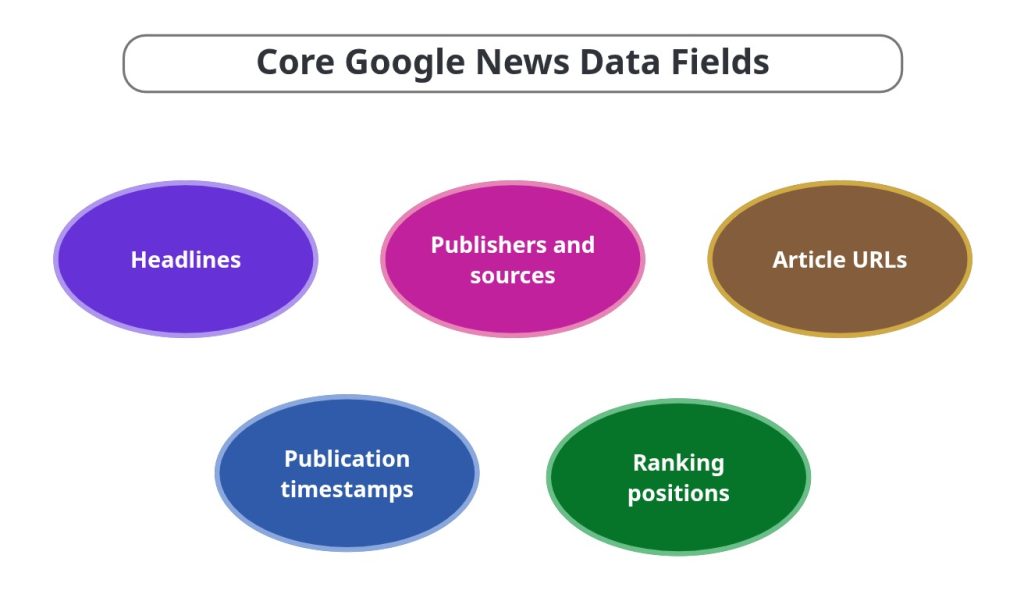
The most commonly extracted data elements include:
- Headlines that show how a story is framed at a specific moment
- Publishers and sources which indicate where the story originated
- Article URLs that link back to the original content
- Publication timestamps that allow freshness and timing analysis
- Ranking positions that show visibility within Google News results
Together, these fields make it possible to answer questions like when a story first appeared, which sources surfaced it early, and how its visibility changed over time.
Keyword and Topic Signals
Beyond basic metadata, Google News also provides indirect keyword and topic signals. Headlines often reflect the primary keywords associated with a story, while clustering reveals how Google groups related coverage. This is why Google News data is frequently used for trend detection and topic monitoring.
Teams extracting Google News keywords usually focus on:
- recurring terms in headlines
- topic consistency across publishers
- shifts in wording as stories evolve
These patterns are especially useful for SEO research, media analysis, and competitive intelligence.
Sentiment and Context Possibilities
Google News doesn’t tag sentiment on its own. But the data makes it possible to understand tone when it’s combined with language analysis. By looking at how headlines are written and how summaries are phrased, teams can get a sense of whether coverage around a brand or topic is neutral, positive, or turning negative.
This is especially useful in brand monitoring. A sudden shift in tone often matters more than the number of articles published. Catching that change early helps teams respond before a story gains momentum.
Real World Use Cases of Google News Data
Google News data becomes valuable when it moves out of the browser and into decision making systems. Different teams use the same underlying data for very different reasons, but the pattern is consistent. They are not reading headlines. They are watching signals.
Below are the most common real world use cases where Google News data is actively used today.
Media Intelligence and Coverage Analysis
Google News data is also widely used to understand how coverage spreads. By tracking when headlines appear, which publishers pick them up, and how quickly they move, media teams can see how a story develops over time. It becomes clear who breaks the news first, which sources drive follow-up coverage, and how narratives change as more outlets get involved. All of this can be tracked without manually checking dozens of sites.
Finance and Market Alerts
In finance, the focus is speed. Coverage volume matters less than timing. Teams monitor company names, earnings terms, or regulatory keywords and trigger alerts as soon as trusted publishers report on them. This allows analysts to react to market-moving news the moment it surfaces, not after it’s already spread everywhere.
Competitor and Industry Tracking
Companies often keep an eye on competitors by watching how they show up in the news. If a name suddenly starts appearing more often, or the way headlines are written begins to change, it usually means something is happening.
Sometimes it points to a new product. Sometimes it hints at a partnership. Other times, it’s an early sign of trouble. In industries that move quickly, these signals tend to surface in the news before anything is officially announced, which is why teams pay close attention to them.
Crisis Detection and Reputation Monitoring
When a problem starts getting serious, the news reacts quickly. You usually see more negative stories showing up, or the same issue appearing on multiple news sites at the same time. That’s often the first sign that something bigger is unfolding.
Teams use Google News data to catch these moments early and see how far the story has spread. In real situations, it’s not just about how many articles exist. Where the story appears and which publishers are covering it often say more about the impact than raw numbers alone.
SEO and Trend Discovery
SEO teams keep an eye on Google News to notice topics that are starting to pop up. These stories usually appear in news results before people begin searching for them in large numbers.
When teams pay attention to the language used in headlines and notice which stories are being shown together, they start to see what Google is focusing on. That insight helps them move sooner, publish content earlier, and tweak keywords before a topic becomes crowded.
Academic and Research Applications
Researchers work with Google News data to understand how news coverage changes and spreads over time. It’s often used to examine bias, political messaging, and how people react to major events as they unfold.
Since the data can be gathered the same way over time, researchers aren’t forced to work with tiny samples or collect everything by hand. That makes it much easier to study changes over longer periods.
Political and Policy Monitoring
Government bodies, policy groups, and analysts track Google News to monitor legislation, public statements, and international developments. Tracking sources, regions, and timing helps identify how political narratives form and shift across media outlets.
Limitations You Should Know
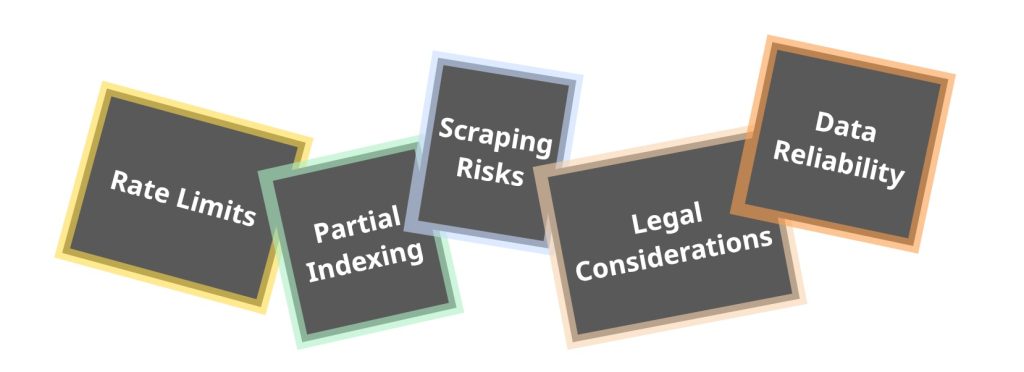
Google News data is powerful, but it is not perfect. Any serious implementation needs to account for its limitations early. Being clear about these constraints builds trust and prevents unrealistic expectations once systems are in production.
Rate Limits and Query Constraints
Most Google News data access methods apply rate limits. APIs enforce request caps to protect infrastructure, while scraping setups face natural throttling through blocking and response delays. High volume monitoring requires planning around request frequency, batching, and storage rather than assuming unlimited access.
Incomplete or Selective Indexing
Google News does not index every article published online. Coverage depends on publisher eligibility, geographic relevance, and editorial signals. Smaller sites or niche publications may appear inconsistently. This means Google News data should be treated as a strong signal source, not a complete record of all news on the web.
Scraping Risks and Maintenance Overhead
Scraping Google News carries ongoing risk. Layout changes, dynamic loading, and blocking mechanisms can break data pipelines without notice. What works today may stop working tomorrow. Over time, maintaining scrapers often consumes more effort than building the original system.
Legal and Compliance Grey Areas
Accessing news data raises legal and compliance considerations. Terms of service, copyright restrictions, and regional regulations vary. While metadata analysis is common, full content usage may require additional permissions. Teams should review legal requirements before deploying large scale collection systems.
Reliability and Long Term Consistency
The biggest challenge is not initial access. It is consistency over time. Monitoring trends, ranking movement, and historical changes depends on stable data collection. Gaps, failed requests, or inconsistent formats reduce analytical value.
Google News API for Developers Quick Start Overview
Developers usually reach this point with one practical goal. They want Google News data in a format their system can actually use, without dealing with rendering issues or fragile scraping logic.
A Google News API keeps that first step simple. You define a query, send a request, and receive structured news data that fits directly into your workflow.
What a Basic Request Looks Like
Below is a simplified Python example that shows how developers typically fetch Google News results. This is not a full setup guide. It is just enough to show how clean the interaction is.
What matters here is not the syntax. It is the structure. The response already contains clean fields like headlines, publishers, timestamps, and URLs. There is no HTML parsing and no layout dependency.
Why Developers Prefer This Approach
In real projects, predictability matters more than flexibility. APIs return the same structure every time, which makes it easier to store results, track changes, and build monitoring logic on top.
This is especially important when working with:
- real time news monitoring
- ranking position tracking
- historical comparisons
- automated alerts
Scraping can technically achieve the same outcome, but it usually adds complexity where teams do not want it.
Where to Go Deeper Without Repetition
This section stops intentionally early.
If you want a full walkthrough with authentication, pagination handling, and storage patterns, the Python setup guide covers that in detail.
If your use case involves continuous tracking, ranking movement, or large scale queries, the advanced integration article explains how developers design those systems without repeating basic setup.
This keeps the pillar focused while still giving developers enough signal that the implementation is real and production ready.
Pricing Models and Access Options
When it comes to getting Google News data through an API, understanding pricing and access options helps teams budget realistically without surprises. Instead of estimating infrastructure costs or maintenance overhead, this section shows you how structured access is priced in a way you can plan for.
SERPHouse Pricing Plans (Google News + SERP API)
Here’s a snapshot of the pricing tiers available from SERPHouse, one of the commonly chosen providers for structured search and news data.
| Plan | Monthly Cost | Includes | Notes |
| Free Trial | $0.00 | 400 SERP credits | Good for testing basic integration and data structure |
| Basic | $29.99 / month | 40,000 SERP credits | Includes HTTPS encryption and priority support |
| Regular | $49.99 / month | 80,000 SERP credits | Adds dedicated support and increased quota |
| Custom / Enterprise | Contact for pricing | Tailored credit volume | Flexible plans for high volume or special requirements |
SERP credits represent units used when you make API calls. Stronger plans simply give you more networking capacity and larger monthly quotas.
Generally, this type of subscription pricing makes budgeting easier because:
- Credits map to actual usage rather than equipment cost
- You pay one provider instead of maintaining your own crawling infrastructure
- Support warranties and uptime SLAs reduce operational risk
Managing credits and request volume is much more practical than tracking proxy pools and dynamic parser breakages, especially in production environments.
What This Means in Practice
For a developer or data team, these pricing models mean you can forecast your data cost based on expected query volume, not server load or time spent maintaining scraping code.
For example, under a Basic plan, you get tens of thousands of structured results every month without worrying about:
- proxies
- rotating IP addresses
- layout changes
- captcha challenges
This predictability is why teams often switch to subscription APIs once data needs stabilize. The focus moves from “Will it keep working?” to “What insights can we extract?”
Planning Your Usage
Before choosing a plan, consider:
- The number of unique Google News queries you expect per month
- whether you need concurrent or batch processing
- How much historical data storage do you require
- whether your system runs continuously or in bursts
These factors influence how many credits or request volumes you will need.
Choosing the right tier helps avoid both overpaying for unused capacity and under-provisioning and hitting limits at the worst moment.
If you want to compare alternative providers or see how credit usage works in a real project, that discussion often appears in dedicated pricing guides rather than this overview.

Who Should Use SERPHouse Google News API?
SERPHouse is not built for casual browsing or one-off experiments. It is built for teams that rely on Google News data as part of their regular workflows and need that data in a stable, structured format.
SEO Agencies and SEO Teams
SEO agencies use Google News data to detect trending topics, breaking coverage, and publisher patterns before they appear in traditional search results. Access to a reliable Google News API helps teams track headlines, sources, and timing across keywords without manual checks. SERPHouse fits agencies managing multiple clients and recurring news monitoring tasks.
Fintech Analysts and Market Intelligence Teams
Fintech analysts track financial news, regulatory updates, earnings coverage, and market signals in real time. Google News is often the first place these events surface. SERPHouse supports use cases where structured news data feeds alerts, dashboards, or quantitative models without scraping instability.
Brand Monitoring and Reputation Management Teams
Brand monitoring teams depend on consistent tracking of mentions, coverage spikes, and narrative changes. A Google News monitoring API makes it possible to collect headlines, publishers, and timestamps continuously and analyze sentiment trends over time. SERPHouse fits teams where missing coverage is not an option.
Journalists and Media Professionals
Journalists and editorial teams use Google News to follow developing stories across multiple outlets. Programmatic access allows them to track how coverage evolves, which publishers lead, and how headlines shift. SERPHouse supports workflows where news aggregation and comparison need to happen automatically rather than manually.
Research Firms and Academic Teams
Research firms and academic teams collect Google News data for long-term studies, media analysis, and topic tracking. Consistent output and historical storage matter more than raw volume. SERPHouse works well for research use cases where structured Google News datasets are analyzed over time.
Data Engineers and Technical Teams
Data engineers look for predictability. SERPHouse provides structured Google News API responses that integrate cleanly into pipelines, databases, and monitoring systems. It reduces the need to maintain scrapers, handle layout changes, or debug failures at scale.
Final Thoughts
When working with Google News data, you quickly notice how fast attention shifts. Stories appear, move between publishers, and gain traction in different regions within hours.
For teams that depend on timely updates to make decisions, this kind of visibility isn’t optional. Without it, you’re always reacting late.
There is no official Google News API, and that reality shapes every technical decision discussed in this guide. Teams either build and maintain their own scraping systems or rely on structured APIs that abstract that complexity. Neither path is right for everyone, but the tradeoffs are now clear.
What matters most is intent. If Google News data is part of ongoing work such as monitoring, analysis, or research, reliability and consistency outweigh short-term flexibility. Systems that run daily or continuously need predictable output, stable access, and clean structure more than they need control over page level behavior.
This blog was designed to give you that clarity. Each section connects to a deeper guide so you can move from understanding to implementation without repeating steps or content. Whether you are experimenting, scaling, or refining an existing workflow, the goal is to help you choose an approach that holds up over time.